Snowden in purgatory

Right now, the number one thing for which I am most grateful:  I am not Edward Snowden.

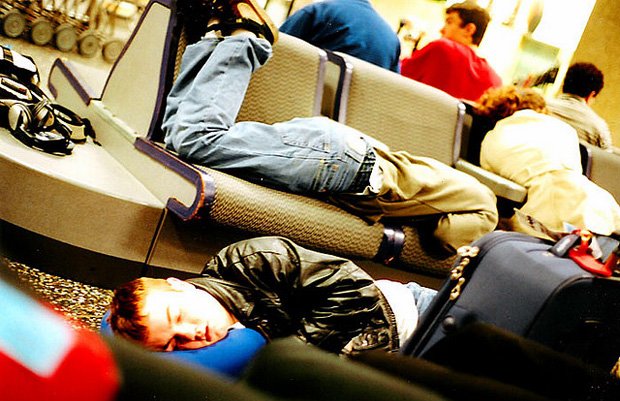
I know whereof I speak.  I only just returned from a trip which involved a nine-hour layover at Schiphol Airport in Amsterdam.  Which, I’m betting, is rather nicer than Sheremetyevo in Moscow.  It is a very peculiar kind of torture.

Passenger Ricardo Schnibblevits, traveling to Tashkent, please report to Gate A9 for immediate boarding, or your baggage will be removed from the airplane, and your reservation cancelled.

The single most important thing that makes such an experience bearable is the knowledge that it is only temporary.  Snowden is utterly bereft of this consolation.  He may glance habitually at his watch, but it tells him nothing of interest.  How many times can he walk from one end of the transit area to the other before he has it memorized?  How many greasy shashliks can his stomach endure before he contemplates a hunger strike just for the novelty?

What is he using for money?  Will his Starbucks card be accepted at Double Coffee?  All the little irritants, horribly magnified.  Like the armrest on the chair where he’s trying to sleep becoming a permanent part of his anatomy, or (shudder) Russian toilet paper.

Sheremetyevo Airport reminds you not to leave your bags unattended.  Unattended bags will be immediately confiscated for security reasons.

What country in its right mind would grant asylum to Snowden, thereby holding him up as an example of sterling behavior to its citizens?  Does anyone really believe a place exists among the nations of Earth that is not at least as bad as, if not worse than, the United States, in terms of secrets, of spying on its citizens, or of any one of hundreds of infringements, large and small, on dignity, not to say liberty?  I’ll grant you, many are not as up to date technologically, but that would only make someone like Snowden all the more dangerous to them.

Hero or traitor, he’s in the land of the Undead for the foreseeable future.  We’re not necessarily talking about days, or even weeks, here.  The world record for this kind of thing is held by Mehran Karimi Nasseri, who endured the departure lounge at Charles de Gaulle for 18 years.  That’s right, 18 years.

Passenger Rickky Platz, please return to the security check-in zone to reclaim your passport.  Passenger Rickky Platz.

In the same clothes.  The same underpants that drove him nuts riding up on the flight from Hong Kong.  How many bags of stale peanuts can one man endure?  I believe I would be on the phone to the US consul sooner rather than later.  In prison, there is at least the exercise yard.

Passenger Edward Snowden, please make yourself as comfortable as you can.  It will be awhile.
Mail order bride

On a long bus ride into the past, watching Riga Center slip by, I become aware of the two voices from the seat behind me. He speaks American English, slow, measured, clearly enunciated. She speaks language-school English, without undue inflection, practiced.

– Riga is a very nice city.
– Yes, very nice.
– I saw a sign somewhere, on the Maxima, I think. It said 00-24.
– Yes, it’s means it’s open 24/7.
– So, if it says 8-22…
– Yes, of course.

(pause)

– Once I walked 2 hours to buy a book. I will show you where; it’s on this line.
– You walked 2 hours?
– I wanted just to walk.
– I hope it was a good book.
– Look, there it is, the bookstore.

(pause)

– There’s a bus with a thing to connect to wires overhead.
– Yes, we call them trolley busses.
– In Paris and London, they have subways.
– They wanted to build a subway here…
– But the electricity is in the rails, not overhead, like here.
– But it was not popular.
– Oh, look, there’s one on rails. They stopped those in San Francisco. Too hard to maintain.
– Yes.
– My ex-wife wants 50% of everything. She will only get 25%.

(pause)

– Graffiti. That means it’s not a good place.
– Yes, outskirts, not so nice.
– Suburbs.
– No, outskirts.
– No. City, suburbs, then country.
– No. Outskirts.

(pause)

– Nothing to do out here, I guess.
– No, it’s nice.

My stop, time to get off. I can’t resist turning around. I see a grey man in his 50s, either fashionably unshaven, or just lazy, can’t tell. Beside him is a rather plump young girl, attractive, a determined look on her pleasant face. I hope it works out. I’m not very optimistic.

Delusion

It’s a funny thing, delusion. We usually only see it in others, or in ourselves in the past tense. Think about the implications of that.

Then get back to me.

The stamp man’s complaint

Janos was a good and dutiful man. He had a small house with a neat little garden plot overlooking the railway station.  He kept his petite wife well supplied with money for groceries, flowers, and other necessities.  And every morning without fail, he boarded the 7:10 into the center of the city, to report for work at the Bureau for Auxilliary Affairs, precisely at 8:00 AM.  His record was unblemished, save for the time he choked on a digestive biscuit and had to be taken to the clinic for treatment. He was 2 hours late that morning; it is possibly the reason he was passed over for promotion yet again.

Which is a damn shame, really. His job was to approve paperwork as it passed through his station. He was a stamp man, and possibly the best in his section, the Department of Supplemental Approval. The official rate of passage of forms to be approved through his station was 30/hr; he himself estimated it at more than 100. Theeoretically, he could mark any given paper with the bright red Returned fo Further Evaluation stamp, rather than the bright green A, but that slowed things down considerably, as he would have to fill out the proper form, and hand carry it along with the Returned paper down the hall to the Department of Approval Appeals. Janos considered this a waste of valuable time, as there was no one ever there. One dropped the papers ino a slot marked IN, and they disappeared. Meanwhile, paper at one’s own station was piling up relentlessly. Over the years, he had gradually come to simply approve everything that came through. That had been an immense relief, for it meant he no longer had to read the papers as they came through; indeed, truth be told, he had forgotten the criteria for approval, or even the nature of the forms themselves. Perhaps that accounted for his legendary efficiency. Janos’ days passed smoothly and inevitably. He was happy, and his superiors were happy. Though not so happy as to promote him.

And so, in the course of events, came this particular day, which to all appearances differed not one whit from any other day.  It was also a day Janos would regret for the rest of his life.  For it was the day he glaanced down at a form before stamping it.  He read,

milk
bread
1 ib butter (unsalted)
tea (Elina’s favorite)

It was, truthfully, not what he expected. True, he was no longer sure what the paperwork was about, but this seemed unlikely. With a hint of a tremor, he reached over to the top of the pile to his left, the already approved pile, and nervously looked at the top, most recently approved paper.

Dearest Sylvia,
I can no longer be responsible for the fire in my heart. I dream constantly of your warm white breasts, the razor-like nipples piercing…

He had read enough. A cold hand gripped his heart. It must have been a quarter hour before he slowly returned his attention to the pile. With each paper, each word, his heart sank further into his shoes.

How to build a fire

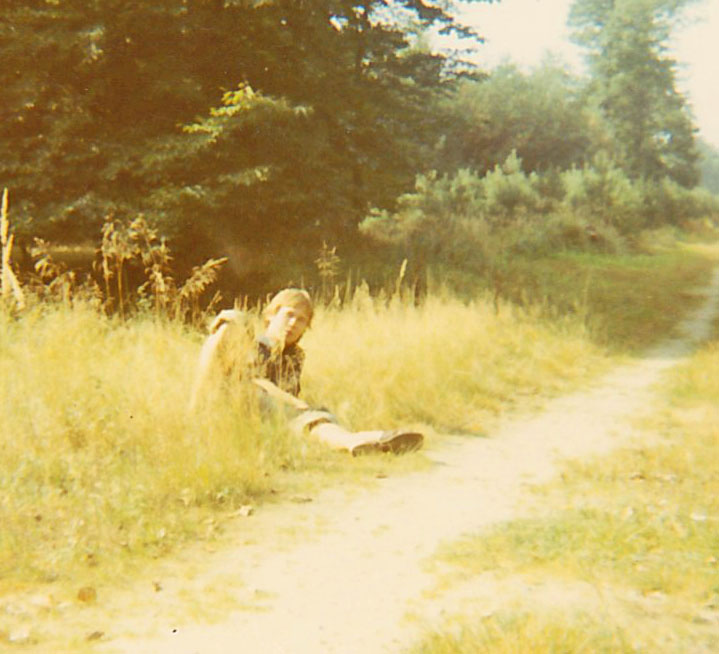
The woods around Frankfurt am Main, Germany, in the late 60s were scrupulously maintained by a cadre of forstmeisters.  Deadfall was cleared promptly, and cords of firewood kept at intervals along the well-groomed paths.  This was to be used elsewhere; open fires in these woods were strictly prohibited.  Germany, like all of Europe, was well trodden through centuries of settlement and resettlement, and Mother Nature was more a well kept mistress than a matriarch.

But this was, after all, the late 60s, and certain paths through certain quarters were undeclared free zones, and the minions of the psychedelic diaspora ran unfettered there.  In one such area, we maintained a kind of salon-in-the-wildwood, with a commandeered military shelter overlooking a campfire that was more or less permanently smoldering.  That fire saw faces and feet, new and familiar, come and go through many nights.  Tall tales, laughter, music, and in one case, an improvised artistic stick-throwing contest, filled those days and nights like the billowing cannabis smoke pouring from the tent.  It was, as I believe I’ve mentioned, the late 60s.

On one particular sodden day, after a solid week of rain, a friend, call him Chuck, and I arrived with the idea of cheering things up with a nice, cozy fire.  After a half hour of rummaging through the surrounding woods, we managed to collect a halfway decent pile of not-so-wet wood.  For kindling, there was always sufficient litter in the tent, partly collected for that purpose, partly the natural detritus of exuberantly youthful living.

So we began.  First, a crumpled piece of paper, with informally piled twigs atop, failed to catch.  Then Chuck suggested a teepee.

“What?”  I said, “You mean the tent?”   Chuck snorted and rolled his eyes.

“No, it’s a Boy Scout thing.  You stack small firewood in a kind of pyramid, then light it.”

“You were in the Boy Scouts?”

The teepee, too, smoldered hopelessly, as another friend, Herbie, arrived, surveyed the situation, and declared the obvious solution.

“You need a log cabin.”  Great, I thought, we’re going to run through the entire history of architecture here.

Nevertheless, what we were doing wasn’t working, so we carefully laid small sticks, of a size precisely to Herbie’s specifications, and stuffed paper from the dwindling supply into the ground floor.  The lighting ceremony was accompanied by the lighting of a large joint Chuck had been preparing.  All went marvelously well.

Except for the part involving the campfire.  It produced lots of smoke, but not much else.  Herbie declared all was going according to plan, that the wood just needed to dry out a bit.  Chuck pointed out the fire had been planned for that day, and not the next.  Chuck and I laughed uproariously.  Herbie grunted and stuffed the last remaining kindling into the structure.  We watched as the fire blazed up, consumed the dry paper like it was … dry paper, then died back to a dull occasional flicker.

Jens arrived.  Jens was from Antwerp, and as far as any of us could figure, had been on the road since shortly after birth.

“What’s happening?” he said.  From anyone else, this was a standard hippie greeting, the equivalent of a grunt of acknowledgment.  From Jens, it was a reasonable question.

“Trying to build a fire,” I offered, “but it’s just too wet.”  Gloom.

Jens looked at the pathetic little pile of semi-charred sticks, and, without a word, turned and walked away.  Just not willing to sit in the damp woods without a fire, I thought.

We continued our discussion of what to do next, whether the attempt was even worth continuing, when he returned.  He was dragging a sodden-looking, moss-covered log, about a foot in diameter and roughly five feet long, which he promptly dropped squarely on top of the remains of our fire building exercise.  A few halfhearted sparks flew out in protest.  A collective groan arose to compete with them.

“Jesus, Jens, thanks a hell of a lot!”  Herbie said.  He had still not used up the last of his theories in defense of the log cabin method.  Jens shrugged and sat down to join us.

We moped in silence for a good ten minutes, until the first flames began licking up the sides of the log.  In a few more minutes, the fire was roaring away; I was dumbfounded.  I looked at Jens with incredulity.

“What?”  he said.

IMG

“Jens,” not his real name