Many years ago, when I was young and foolish enough to be perfectly safe doing the most dubious things, I toured Morocco on less than fifty bucks, US. I took a boat to the Spanish enclave of Melilla, and walked across the border to Nador, a town no one had ever heard of, before or since. My traveling companion, Stu, was a friend from my Air Force days. Nador turned out to be a bit of a hike from the border. We must have been a sight for the local fisherman, all backpacks and guitars and covered with road grime; I wore a fedora and had a large bowie knife strapped to my belt to complete the picture. Singing cowboys for sure, they must have thought, but where are their horses?
I won’t tell you all of our adventures there; I have the right to remain silent. Suffice it to say we grew wary and slightly uncomfortable. Our solution was to get on a bus, all goats and chickens, and cross the Rif Mountains to the royal city of Fes. The Rif had the distinction of not having been conquered, by anyone. Ever. Not the Romans who reduced Carthage to rubble and salted its fields, not the Arabs who swept across the Maghreb like a scythe in a wheatfield, and not the Spanish or French, despite claims to the contrary. So it shouldn’t have come as a surprise to see Rif tribesmen, their eyes like iron gates slammed shut, climb aboard with ancient Remington rifles slung across their backs. But it was.
Next to me sat a dapper young man who spoke English, and spent much of the journey telling me how alike we were, and how unlike the restless, glowering tribesmen. Luckily, he got off the bus midway through the trip, before any of the other passengers, who I swore could understand at least some of what he was saying, swatted us like the annoying flies we must have seemed.
A lot of other amazing and interesting things happened on that journey; maybe I’ll tell you about them another time. This story is really about Fes, at which we arrived about midnight, exhausted.
Fes is one of the great ancient cities of Morocco, and one of four with a royal palace, each from a different period. Like all North African cities of any size, it bears the imprint of European colonialism, in that part of it is indistinguishable from any city in Europe, and the other part, called the medina, is like stepping into the twelfth century. Medina in Arabic simply means city, as in Madinat Al-Nabi, the full name of Medina in Arabia, the “city of the prophet”, Muhammad. That’s a long story itself, but can be easily recovered from Wikipedia, so I won’t go into it. In the Maghreb, these “cities” are the remnants of pre-colonial cities where they were large enough to survive modernization. There are two adjacent medinas in Fes, Fes al Bali and Fes Jdid. Al Bali is the older, and is particularly enthralling, its ancient walls still standing, pierced by some twenty gates, ranging from the magnificent to the humdrum.
Stu and I had landed at one of the least imposing of the gates, Bab Ftouh, the entrance to the potters quarter, in a darkness as black as our demeanor at seeing a small square filled with dark doorways and the occasional hooded figure. The bus had disgorged its cargo, and all but the two of us had quickly melted into the shadows. How we passed that night has utterly vanished from my memory, probably just as well, because the next day was washed with sunlight, and we decided to make our way to Bab Bou Jeloud. A brilliant decision, as it took us through almost the entire medina, passing through the main souk, and by dusk, we found a small pension near our destination. It was a dark and damp room with no water. Outside the door was a large basin with cold running water, and nearby was a squatter for less social activities. But it was cheap, about twenty cents US a day, and it was home. Since it was just inside Bab Bou Jeloud, the main entrance to the medina, it was also near the amenities of the modern city, which included public showers for a dirham or two. Across the street was a small restaurant where one could get a gigantic bowl of nutritious soup and all the khubz one could eat for a few pennies. I often saw beggars get fed for free there. I never saw one turned away.
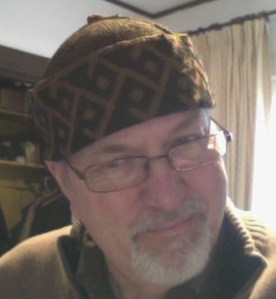
So many stories could go on from this point, but instead I will get to the point, which is, dentists and story tellers. On our trek to our new home, we had seen marvels in the souk, but one had stuck in my imagination: a small table covered with a white cloth, with dozens of teeth arrayed on it. I had to know what that was all about. And so, one fine morning I set off to find out. Forty-odd years ago, when this took place, one walked through early morning Fes al Bali in the middle of the narrow, twisting streets, to avoid getting hit by the contents of chamber pots emptied through second floor windows. Being a cautious sort, I bought a hat from a vendor in the street. He had attached himself as I passed, and was trying to sell me a djellaba sized for a midget. I settled on the only thing he had that would fit me: the hat on his head. Deal!
Within the boundaries if this particular souk was an open square, and that was where I found my destination. This time there were three tables of teeth, not just one. Some friendly competition! On closer examination, most of the teeth were whole, and next to them on the tables were dental extractors, i. e., pliers. These were dentists, and the one with the most unbroken teeth on display was the best. My current dentist says this is actually a pretty good measure of dental skill, since it is difficult to pull diseased teeth without breaking them off.
I learned this through a combination of gesture, and a mixture of French, Spanish, and English, none of them properly deployed, no doubt, but nevertheless adequate to the purpose. Next to Dental Row, against a wall, a man had been regaling an audience the whole time I was bantering with the dentists; it turned out he was a story teller, a common fixture in many parts of the world with few electronics. For tips, he would tell long, often dramatic stories; for larger tips, he would include your name in a custom made story of your own. I was looking at a direct cultural descendant of Homer.
He had heard the clatter of languages at the dental tables, and saw me approach. More gesturing; I told him my name, and he launched into a lengthy monologue punctuated by alternating groans and gales of laughter from the growing audience. The performance lasted about fifteen minutes; all I could understand was the periodic occurrence of my name, but I could see from the reaction of the crowd that it was a splendidly wrought tale with twists both dramatic and humorous. He got a very nice tip from me, and more from the rest of the listeners.
I would love to know what the story was. Or maybe not. At any rate, I left the souk that day with my teeth intact, an incomprehensible story ringing in my ears, and this marvelous hat.

 Omniop