What I think I believe: A prose poem

To say there is no duality is to concede there is.

To say God has a list is ignorance.

To say you know anything for sure is naive.

To believe in a separate, personal God is nothing short of ridiculous.

Every religion tells us that God is immutable, omnipotent, and utterly ungraspable by the human mind.  Every religion goes on to tell us exactly what is in the mind of God.

Do you think your one, holy, catholic and apostolic church has droned the same immutable message since it rose from the ashes of the Roman Empire?  Do you really believe your free-thinking, free-wheeling nihilistic Buddha is the same one who sat, perplexed, tormented and impatient under the Bodhi tree?  Can it be your quibbling, etymological Yaweh is the same brutal partisan of the Torah?  Is your pitiless prophet the same one who forgave the Meccans for trying to destroy him?

Congratulations, you have mastered the difficult art of intransigent gullibility.  Nothing is changeless, not even the divine genealogies your ancestors would find disturbing without their context.

Yes, there is a God, created and lovingly maintained by his human masters.  How could it be the opposite?  Does God shave?  What does he eat?  What use would he have of testicles?  Where does he get his clothes?  How can he have demands?

In my universe, there is no god but All.  There are no demands, no rewards, no punishment.  Leave that kind of stuff for humanity.  The meaning of life is life.  The meaning of death is life.  The meaning of humanity is arrogance.  The meaning of good is evil.  The meaning of my right hand is my left hand.

How can it be otherwise?

Me, an egoist? Why yes!

Id est, ego impedirent.  It’s a pun:  (The id) is, (the ego) obstructs.  Wicked little thing, the ego, isn’t it?

Well, no.  According to Herr Doktor Freud, who made all this up, if it weren’t for the ego, we’d all be hellish little biennials in massive grown-up bodies.  Of course, some of us are just that, but it’s from a lack of ego, not a surfeit.  In any case, it’s a package deal, not sold separately.

It’s possible he was wrong.  It’s possible it’s not a package at all, but a great, shining orb, uncleavable and protean, take it all or leave it all, no quantum bits involved.  But we like to think he was right.  It feels right.  We want something, and the little voice inside the head schemes how to get it while not getting whacked for it. All the while some part of us debates if it’s worth it, all things and the gods of them considered.  It just feels separate, doesn’t it?  It’s id, ego, and superego, in that order.

The id just is, i. e, i. e.  It operates on the pleasure principle, which should be familiar to most of us.  Something inside doesn’t feel right.  Homeostasis not achieved.   Prepare to repair.  Want THAT!  Pure organic desire, switched on when something is lacking, and running until we get it.  It’s why we don’t get absorbed in cloud watching and forget to eat, or why we don’t keep sitting on a hot stove, while discussing that odd smell.  Survival is all for id, the original single-issue voter.  Unfortunately, things can get testy when other people are involved.

Enter the ego.  We are, after all, social animals.  We literally (yes, I literally mean literally) cannot survive without each other.  There are no known cases of genuinely feral humans; every wild child of lore at least began life in the bosom of family.  What we do after we’re grown is another issue; we’ve already created ourselves by then.  The ego mediates the demands of the id, and puts them in acceptable form to allow us to continue to live with people.  How tedious!  How antithetical to our extreme, no-limits values!

What oxymoronic rhetoric!  Remember, those are our values; we collectively decided that’s how we want to live.  Hidden in there is the implicit need to mitigate our effects on each other.  That’s what the ego is for, keeping that self absorbed, childish, hedonistic jerk, the id, on a leash.

That’s the superego keeping the ego on a leash.

Heilige Sigmund und seine Phalikensymbolle

Der Heilige Sigmund und seine Phallussymbol

Hats, dentists and story tellers

Many years ago, when I was young and foolish enough to be perfectly safe doing the most dubious things, I toured Morocco on less than fifty bucks, US.  I took a boat to the Spanish enclave of Melilla, and walked across the border to Nador, a town no one had ever heard of, before or since.  My traveling companion, Stu,  was a friend from my Air Force days.  Nador turned out to be a bit of a hike from the border.  We must have been a sight for the local fisherman, all backpacks and guitars and covered with road grime;  I wore a fedora and had a large bowie knife strapped to my belt to complete the picture.  Singing cowboys for sure, they must have thought, but where are their horses?

I won’t tell you all of our adventures there; I have the right to remain silent.  Suffice it to say we grew wary and slightly uncomfortable.  Our solution was to get on a bus, all goats and chickens, and cross the Rif Mountains to the royal city of Fes.  The Rif had the distinction of not having been conquered, by anyone.  Ever.  Not the Romans who reduced Carthage to rubble and salted its fields, not the Arabs who swept across the Maghreb like a scythe in a wheatfield, and not the Spanish or French, despite claims to the contrary.  So it shouldn’t have come as a surprise to see Rif tribesmen, their eyes like iron gates slammed shut, climb aboard with ancient Remington rifles slung across their backs.  But it was.

Next to me sat a dapper young man who spoke English, and spent much of the journey telling me how alike we were, and how unlike the restless, glowering tribesmen.  Luckily, he got off the bus midway through the trip, before any of the other passengers, who I swore could understand at least some of what he was saying, swatted us like the annoying flies we must have seemed.

A lot of other amazing and interesting things happened on that journey; maybe I’ll tell you about them another time.  This story is really about Fes, at which we arrived about midnight, exhausted.

Fes is one of the great ancient cities of Morocco, and one of four with a royal palace, each from a different period.  Like all North African cities of any size, it bears the imprint of European colonialism, in that part of it is indistinguishable from any city in Europe, and the other part, called the medina, is like stepping into the twelfth century.  Medina in Arabic simply means city, as in Madinat Al-Nabi, the full name of Medina in Arabia, the “city of the prophet”, Muhammad.  That’s a long story itself, but can be easily recovered from Wikipedia, so I won’t go into it.  In the Maghreb,  these “cities” are the remnants of pre-colonial cities where they were large enough to survive modernization.  There are two adjacent medinas in Fes, Fes al Bali and Fes Jdid.  Al Bali is the older, and is particularly enthralling, its ancient walls still standing, pierced by some twenty gates, ranging from the magnificent to the humdrum.

Stu and I had landed at one of the least imposing of the gates, Bab Ftouh, the entrance to the potters quarter, in a darkness as black as our demeanor at seeing a small square filled with dark doorways and the occasional  hooded figure.  The bus had disgorged its cargo, and all but the two of us had quickly melted into the shadows.  How we passed that night has utterly vanished from my memory, probably just as well, because the next day was washed with sunlight, and we decided to make our way to Bab Bou Jeloud.  A brilliant decision, as it took us through almost the entire medina, passing through the main souk, and by dusk, we found a small pension near our destination.  It was a dark and damp room with no water.  Outside the door was a large basin with cold running water, and nearby was a squatter for less social activities.  But it was cheap, about twenty cents US a day, and it was home.  Since it was just inside Bab Bou Jeloud, the main entrance to the medina, it was also near the amenities of the modern city, which included public showers for a dirham or two.  Across the street was a small restaurant where one could get a gigantic bowl of nutritious soup and all the khubz one could eat for a few pennies.  I often saw beggars get fed for free there.  I never saw one turned away.

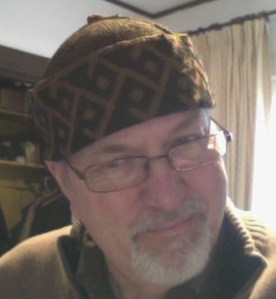
So many stories could go on from this point, but instead I will get to the point, which is, dentists and story tellers.  On our trek to our new home, we had seen marvels in the souk, but one had stuck in my imagination: a small table covered with a white cloth, with dozens of teeth arrayed on it.  I had to know what that was all about.  And so, one fine morning I set off to find out.  Forty-odd years ago, when this took place, one walked through early morning Fes al Bali in the middle of the narrow, twisting streets, to avoid getting hit by the contents of chamber pots emptied through second floor windows.  Being a cautious sort, I bought a hat from a vendor in the street.  He had attached himself as I passed, and was trying to sell me a djellaba sized for a midget.  I settled on the only thing he had that would fit me: the hat on his head.  Deal!

Within the boundaries if this particular souk was an open square, and that was where I found my destination.  This time there were three tables of teeth, not just one.  Some friendly competition!  On closer examination, most of the teeth were whole, and next to them on the tables were dental extractors, i. e., pliers.  These were dentists, and the one with the most unbroken teeth on display was the best.  My current dentist says this is actually a pretty good measure of dental skill, since it is difficult to pull diseased teeth without breaking them off.

I learned this through a combination of gesture, and a mixture of French, Spanish, and English, none of them properly deployed, no doubt, but nevertheless adequate to the purpose.  Next to Dental Row, against a wall, a man had been regaling an audience the whole time I was bantering with the dentists;  it turned out he was a story teller, a common fixture in many parts of the world with few electronics.   For tips, he would tell long, often dramatic stories; for larger tips, he would include your name in a custom made story of your own.  I was looking at a direct cultural descendant of Homer.

He had heard the clatter of languages at the dental tables, and saw me approach.  More gesturing; I told him my name, and he launched into a lengthy monologue punctuated by alternating groans and gales of laughter from the growing audience.  The performance lasted about fifteen minutes; all I could understand was the periodic occurrence of my name, but I could see from the reaction of the crowd that it was a splendidly wrought tale with twists both dramatic and humorous.  He got a very nice tip from me, and more from the rest of the listeners.

I would love to know what the story was.  Or maybe not.  At any rate, I left the souk that day with my teeth intact, an incomprehensible story ringing in my ears, and this marvelous hat.
picture008

Enlightenment and other illusions

Shall we live in the moment?  It’s possible, of course, to do it, but we cannot experience it.  Just from the sheer physics of it: something happens, and it takes some time – not much, but some – for the data to physically reach our senses.  Not even light is instantaneous.  Then a signal has to travel from the outer shell to the brain.  By the time we’re aware of it, it’s over.  Only those unfortunate few who are technically alive, but in a persistent vegetative state may be living in the moment.  Even then, it’s possible we’re missing some signal or other being sent out of that quiescent skull into the room, the hospice, the eternal vastness beyond, missing that faint tapping on the inner bone that indicates a thing is living in there.  As for what it’s like in that locked room, that’s a subject to be set aside for later perusal.

Right. Technically we can’t live in the present.  But awareness cannot exist without memory, even from a subjective point of view.  When you see a face, what you’re getting is a pelting stream of photons, constantly changing; you have to supply the meaning.  There’s a story of a congenitally blind man who, through surgery, was able to see for the first time.  He described it as an onslaught of totally unfamiliar data.  He could only identify what must have been his wife’s face because the sound of her voice seemed to be coming from it.  She was neither beautiful nor ugly, just disturbing; it was, indeed, hard to tell where the face ended, and its surroundings began.  It was bewildering.  Ultimately, he became blind again, but not from any physical cause.  He simply couldn’t deal with the odd new sensations.

Imagine all your senses like that: vibrating ear drums, tingling skin, chemical eruptions in the nasal passages, all prompting a deluge of neuronal activity, incomprehensible because never before experienced, yet unavoidable.  We only know what these things mean because we live in the past.

Okay, sure, you say, we need a bit of the past, but surely we can avoid the future.

Can we, now?   Let’s plan on it.

Life on the Mississippi

In a dusty, fading memory of a National Geographic of my youth, among the bare-breasted African ladies and stripe-shirted Parisians, there is a sunny picture of a lad on a raft, his toes swirling the Mississippi River.  His father had taken him out of school for a year of rafting on that mythic Father of Dreams, if not waters.  Why could not I have a father like that, I grieved.

My own father thought peace, not adventure, was the greatest gift.  He was born and grew in Latvia, in a forest of kin, as much a part of his place as the oak trees planted for the native sons.  A small stone house, a well, three oaks and a horizon of fields.  A burial ground nearby sheltered his ancestors on both sides; their names are gone now, weathered away like the wooden crosses that marked their graves.  But he was there, where he belonged, in the embrace of family, living and dead.

When I was a boy, I would stand in front of the door of my house, looking outside, wishing and wondering.  I think he was like that.  Bye and bye, whatever was beyond the fields of oats and rye beckoned, and he answered.  In a fit of irrational exuberance, he joined the army.

Not bad, really, at least at first.  It was a free country, for that brief period between the great wars, and nothing for soldiers to do but dream of dying under foreign skies, all brave and noble.  They certainly had the songs for it.  He went off to Riga, to the War College.  It was a blast.  Bright lights, big city, no way to keep him down on the farm after that.  He married a girl with an eighth grade education and a mind that was quicker than a hare chased by two foxes and an alley cat.  No slouch himself, he thought she was normal.  They had a couple of children.  You know that feeling, in a dream, when you’ve climbed to the highest peak to look at the world, and you turn around to discover the mountain has disappeared while you weren’t paying attention?

Russians.  Germans, then Russians again.  The world was in one of its fits.  This part of the story is a haze of half glimpsed hopes and fears, mostly projections on my part.  Like one of those stunts on a magician’s stage : a loud noise, a lot of smoke, and when it all clears, everything is different.    In a camp in Germany, full of shattered dreams, I was born, much to the chagrin, I’m betting, of my brothers.

The father I knew had had enough adventures, thank you.  He had made some promises to God when all else had crumbled; he did his best to see that his children fulfilled them.  Keep this in mind when you promise things to God: don’t involve others.  Faust probably had a better deal.

These days, I live near the Mississippi, and occasionally, when I drive upriver, I see that kid on the raft in my mind.  I’m older now than my father ever got.  I hope I’ve done as well as he did.