Hey, welcome back. It’s been – what – almost 70 years! My God, the time flies. You’d think after all that time you’d hardly know the place. I guess that’s true, in a way. I mean, the big shopping centers in the Old Town, and on Dzirnava Street; nothing like that in your day. I know, I know, the city market; it’s still there, still huge and bustling, but in an organic way, like mushrooms and dandelions. These other places, well, you know them from America. Conceived and built from scratch by speculators long before anyone guessed they wanted them, and yet wildly successful, fulfilling God knows what lack. How could they be here, of all places?
I tried to find your old place on Ernestine Street – ridiculous, I know, since I don’t know the number. I did find a lovely little park, filled with trees and hillocks and children’s swings. I imagined you lived in one of the houses facing it, and watched your boys playing there.
What’s that? Oh, the graffiti. Ugly, isn’t it? Another import from outside. Partly copied from those Americans you never quite figured out, partly welled up from within during those cold grey years under the Dogma. I know, the people making it were never alive in that time, but cultures have a way of making hurt live on long after real grievances have gone extinct. My God, look at the Israelis and Palestinians, after 3000 years!
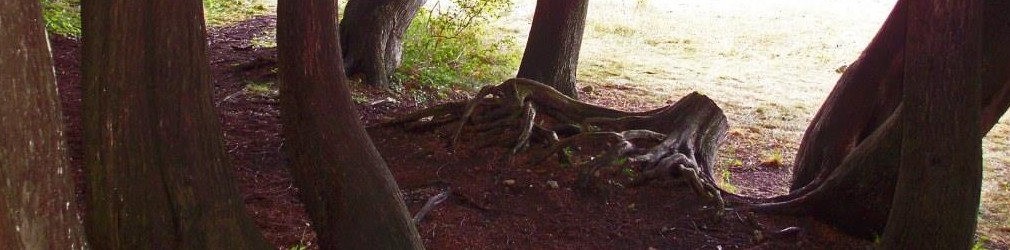
Still, there’s a lot you’d find familiar, I’ll bet. Just today, I was strolling in the Forest Park. You know the place, at the end of the trolley line, past all the cemeteries filled with the dead from wars and ordinary life. I’ll bet you’d find a few old friends in those places! A bit overgrown these days, at least in parts, and amidst a few soviet apartment buildings I guess would break your heart, covered with, yes, graffiti. I should have warned you. But at least the graves are well tended.
Near the canal by the Old Town, boys and girls still lay out their blankets on the grass, and give each other such joy as they can under the circumstances. Their soft laughter blends so well with sparrow’s songs, I can hardly tell the difference sometimes. I know you sat together here often; if I only knew the spot. You’d be shocked, though, to see how little they wear these warm summer days, not like the elegant suits and dresses of your day! Still, there might be a twinkle in your eyes. It is nearly midsummer – full breeding season here.
They still have those wooden boats, you know, to cruise out to the river in. I bought a straw hat just for the purpose. I wonder if you ever did.
Russian voices are everywhere. I doubt that would bother you. I still remember warm evenings of food, drink and fellowship with the Russians and Jews who came to share dinner with you when I was growing up. I never understood what you talked about, but it was grand, judging from the atmosphere.
There’s music everywhere, of course. I think you would have been shocked to find otherwise. I’m glad it took me this long to show you around. A few years ago, when I first came here, there were sour faces everywhere. Not so long before that ordinary people died in the streets for independence. The long gray shadow of the Soviet Union still cast its spell. Now, people seem to have forgotten how to be cynical, in spite of hard times lately. I mean, here’s a people who, despite centuries of conquest and exploitation kept their own language and culture, and sweet, cheerful demeanor. Okay, so maybe it’s because no one bothered to eradicate it. Still, it was there all along, invisible but strong. The last century was not the longest or worst period they’ve survived.
Did I tell you, there’s been a renaissance of tradition? That music I mentioned: yes,there’s the ubiquitous hip-hop, metal, and pop drivel, but rather a lot of traditional stuff as well. I doubt you’re surprised; music is music, as any Latvian will tell you. Today in Forest Park I passed an old man (Old! He was probably my age!) playing songs on the accordian I’ll bet you could sing along with. And in the Old Town, I saw a little girl, maybe 10 years old, playing a lap dulcimer and singing, with a beautiful clear voice, songs I heard from you, I believe even before I was born. The old religion is everywhere, much to the chagrin, I’m sure, of Christian sourpusses. But wasn’t it always like that? The old oaks and elms, the thunder and fortune, could always accommodate a god or two in excess.
Dad, don’t listen for awhile, I’m talking to Mom now. I know you were afraid you were going to hell. Personally, I doubt you’re anywhere other than in my heart. But if you are, it’s not hell. You knew the value of the old ways, you felt the pulse of gypsies beating in your heart. There is no god worthy of the name who couldn’t stand that, who couldn’t see the beauty and righteousness of it.
Dad, I have no way of knowing what horrors you passed through. I know you were a good man, and I know you never wavered in doing what you thought was best for us. I took me a long time to forgive you, longer still to forgive myself. At last, it’s done.
I can’t quite grasp what it was to see it all crumbling, to watch the poison seeping into such a rich well, to leave it all so utterly behind. Did you really think you’d ever come back?
Anyway, I’m so glad I could show you around the old place. I hope you enjoyed it.

 Omniop