Into the wild

IMG_1011

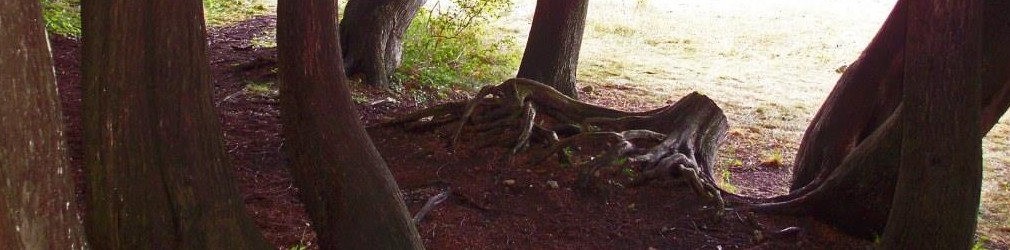
Today, while wandering through the beautiful campus of Southern Illinois University – Edwardsville, I had the rare privilege of stumbling upon a herd of bicycle, gamboling on a hillside.  I quickly snapped a photo; I apologize for the focus, they were gone in a flash.  Still, I was able to notice a few thing that might be of interest.

As you can see, unlike their domesticated cousins, wild bicycles all have the same distinctive markings; I didn’t see any exceptions.  In addition, there was no size differentiation, such as we are used to seeing.  This is not really surprising; compare dogs and wolves, for example.

But the most notable thing was their joyful abandon, capering through the campus.  I wish we could re-instill that feeling in the domestic bicycles we all love!

Don’t beam me up, please

It’s an old dream, the ability to move instantly from one place to another, far off.  Only shamans were ever able to do it, though.  But now, there’s a chance it might actually happen for all of us, in the not too ridiculously distant future.

Technically, there is no reason why we can’t eventually have teleporters – little booths you can walk into and walk out of thousands of miles away at the speed of light, providing there’s one at each end.  Sort of.

You knew there was a catch, didn’t you?  Using existing technology, the process involves reading all the information of which you are composed at one end, and reassembling you at the other end by dumping it.  This does involve your complete destruction at the transmitting end, of course.

That’s the interesting part.  The reassembled you at the destination would have all your cells, synapses, and nerve endings reproduced exactly as they were at the moment of your dismantling.  This includes your brain, where everything you know is stored in the precise configuration of its parts.  The original you may be destroyed, but the new you will remember going into the transmission booth, and coming out unscathed at the end.  So, is that you, or isn’t it?  What exactly do we mean by “you” anyway?

To an outside observer (scientist, friend, mother) it would be indistinguishable from you.  Come to that, to an inside observer (the reassembled you), the same would be true, since it would contain all that defined the earlier you.  But the original you was destroyed in the process.  What we always knew as you is dead, my friend.  It has been reduced to its constituent components, little electrons whizzing around little protons and neutrons, completely devoid of the patterning we came to love all those years before the experiment.

Here’s the weird part: because the teleportation involved reading all the information that constituted you, then transmitting it to a new location, it could presumably be saved.  You could be stored on a disc and not reassembled until later.  Much later.  Multiple copies of you could be made, all of which would insist it was the real you.  Each of them would be the real you, by any existing standards of evidence.

So, we end in a situation in which you are dead, because we killed you to get at your information, but you are still walking around in multiple iterations, perhaps having violent confrontations with each other over their authenticity.

Here’s the real question, which is so bizarre I’m having difficulty putting it into words:  Would you, that entity which now lives in and looks out at the world from your body, which is the experiencer of your history, which debates with itself over the nature of the reality presented it by your senses, would you inhabit any or all of your new selves?

picture025

A fable

Crusty Paul sat in his apartment, water lapping at his feet, when there was an insistent knock at his door.  He sighed and got up to answer it, knowing full well it was Larry, his annoying neighbor from downstairs.  He opened the door, and sure enough, there was Loopy Larry, a look of stern admonition on his insipidly righteous face.

“There’s water dripping on my head again, Paul,” he said.

“Well, I’ve told you before, just get used to it.”

Loopy Larry sighed.  “Have you let the bath run over again?”

A flush rose to Paul’s face.  “So what?  It’s just your stupid theory that that’s what’s making water drip on your head.”

“It’s not just a theory.  Every time it happens, I come up here and you’ve let the bath water run over.  Look at your floor, for chrissake, it’s covered with water!”

Paul looked at him with an expression of someone explaining some simple fact to a rather dense child, for the hundredth time.

“If you look at the past, you’ll see there are lots of times when water just falls out of the sky, for no reason.  How can you say my bathwater causes your problem, when we know that happens naturally, all the time?”

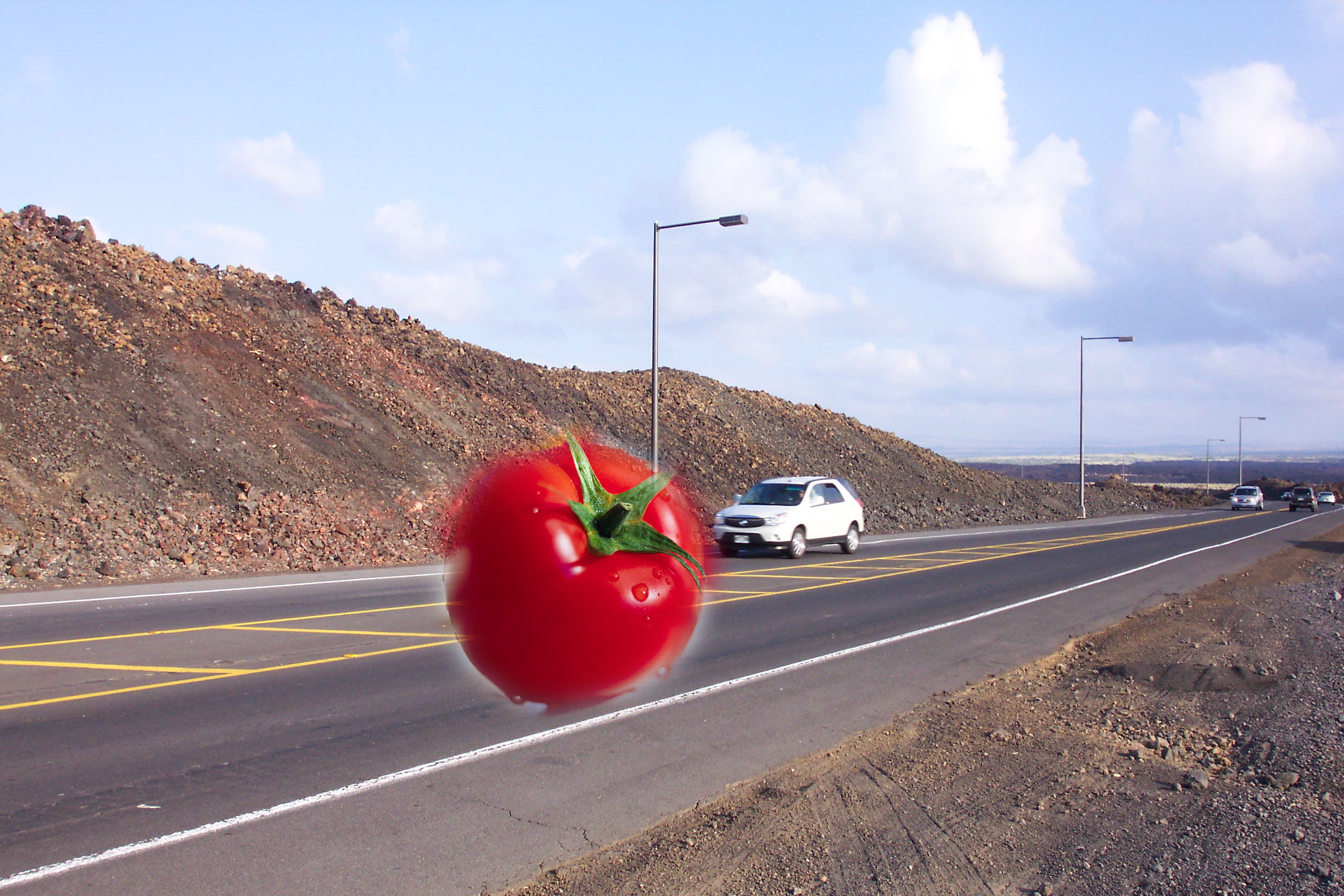
Deadly tomato touches down in Hawaii.

This photo shows a deadly Category 4 tomato touching down Near Kona, Hawaii.

100_1389 copy

The ki to chi

Any one with at least a passing acquaintance with martial arts knows about ki, or chi, depending on the country of origin.  Most can give you some kind of definition, along the lines of, “a mysterious force you can tap into.”  Higher ranks will get you more mystical rhetoric, but the gist is usually the same.  You can “have” more or less of it, depending on your skill level in the art.

This is contradictory, since the force is said to pervade everything, a kind of combination of ancient Egyptian ma’at and the “ether.”  As a member of the universe, then, one has as much of it as anyone else, if indeed such a protean force can be said to be had.  Shin Shin Toitsu (Ki Aikido) recognizes this contradiction, and no longer speaks of an individual extending his or her ki, but rather being mindful of its existence.  There is, however, still talk of blocking ki, as if a miniscule speck can stop a force of nature from acting.  Worse yet, this is usually said to be done inadvertently, as if it is a human’s nature to block another nature.

I have seen amazing things done in martial arts, both in person and on video, even the famous touchless throw.  But all of what I have seen is explainable in terms of skill and timing, and the ability to anticipate how one’s opponents actions will unfold.  So, do I believe there is such a thing as ki or chi?

Yes and no.  If I have to accept a mysterious force that is separate from gravity, momentum, and biomechanics, count me out.  There are ways of moving, however, in concert with those familiar forces that are far more likely to get the results we want.  You don’t have to find a martial arts master to see it in action.  It’s there in a laborer who’s been at the job for years, and has pared down the energy required to dig a hole to the maximum efficiency.  I recall when I was a young man working on construction jobs, coming home spent at the end of the day.  There was an old man, Leroy, who never seemed to break a sweat.  He never hurried, never cursed, and was cheerful no matter what the situation.  Some people said he was lazy.  The only thing was, when you looked to see what everyone had accomplished at the end of the day, Leroy was always way ahead, untired, and still cheerful.  Leroy “had ki.”

Had he tapped into some mysterious supernatural force?  No.  He had simply stopped wasting energy on actions that did not contribute to the task at hand.

I say simply, but I do not mean easily.  His cheerful demeanor was not unrelated to his skill; to do this you must relax everything that isn’t working towards your end.  That includes your mind.  I won’t go into the techniques that will get you there.  Suffice it to say that Leroy’s skill was the result of a lifetime of work.

More examples of this are everywhere.  Think of a skilled musician, a carpenter, a surgeon, an athlete.  Think of yourself walking through a crowd.  Do it.  Go to a crowded mall, walk, and try to think ahead of what to do next to avoid each oncoming person, each person passing, each physical obstacle.  Then just give it up, and walk.  Which was the more successful?

How did you do it?  It’s not obvious.  Watch a toddler try the same thing.  Chaos.  You managed because you and everyone else involved have been walking and avoiding people and things all your lives.  You’ve gotten good at it.  No mysterious force required.

Of course, if someone is trying to harm you, that complicates things considerably;  it’s as if someone in the crowd were deliberately trying to bump into you.  It’s a situation you’re not as familiar with.  But what if you trained to keep your body in a position to move in any direction in an instant?  What if you also trained to anticipate the intention and the momentum of someone coming towards you.  Those things require calmness and total relaxation.  Nervousness will distract you, and muscle tension will impede your movements, so what if you trained yourself in those arts as well?

You’d have ki, my friend, all from within yourself.