
Egypt’s lesson for America

The term of President Mohamed Mursi ended abruptly Wednesday, as the Egyptian army took control, arrested him, and declared his government over.  A coup, in plain words, toppling the country’s first democratically elected president from power.  We should be outraged.

Or should we?  Mursi’s missteps, succinctly recounted in this Reuters article, seemed to almost ensure his demise, but incompetence, even recalcitrance, alone doesn’t justify annulling a popular election.  What doomed his regime, and what, to me, provided reasonable cause for his removal, was his November 22 hijacking of the constitutional assembly process.  On that day, he assumed for himself emergency powers, by which any and all oversight of the assembly, previously packed with his Muslim Brotherhood compatriots, was crushed.  This included any discussion of the packing itself.

When the assembly predictably returned a constitution leaning heavily toward Islamist principles, the public rebelled, and took to the streets once again.  Mursi’s response: quell the demonstrations, force an early referendum, before the opposition had a chance to organize itself, and ram the new constitution through.  Every move after that was right and proper, according to the new constitution, but if the constitution itself is suspect, such legality is moot.

Mursi’s victory was on the slimmest of margins, and was largely the result of the disunity of the opposition.  As it was, he was forced into a runoff against Ahmed Shafik, who was arguably handicapped by having been Prime Minister under Hosni Mubarek.  Shafik still managed 48.3% of the vote.

This is the crux: having won by a small margin, Mursi proceeded to rule as if he had a crushing mandate, assuming emergency powers when conventional channels disfavored him, and thoroughly ignoring any of the concerns of the opposition, accusing them instead of subversion.  No compromise.

So, the burning question is, is democracy simple majoritarianism?  We hear a lot about majority rule with regard to democracy, but is that all there is to it?  In the United States, the constitution, specifically the Bill of Rights, declares otherwise.  The very concept of rights quite bluntly limits the power of the majority to enforce its will, and protects minorities from its ill will, right down to the individual.  I use the term “minority” here in its strict sense, not the political sense of identifiable interest group.

But on a subtler level, the implication is that the interests of such minorities must be taken into consideration by the leaders elected by the majority, even when swept into office by groundswell.  Still more, when the margin of majority is as thin as spring ice.

Which brings us to the infamous gridlock of American politics.  It is grounded on the idea that, in a democracy, the winner takes all, that it is unnecessary, even irresponsible, to compromise with the losers.

We seem to have a lot of Mursis in American politics these days.  Let’s take Egypt’s fate as an object lesson, and avoid that treacherous path.
Snowden in purgatory

Right now, the number one thing for which I am most grateful:  I am not Edward Snowden.

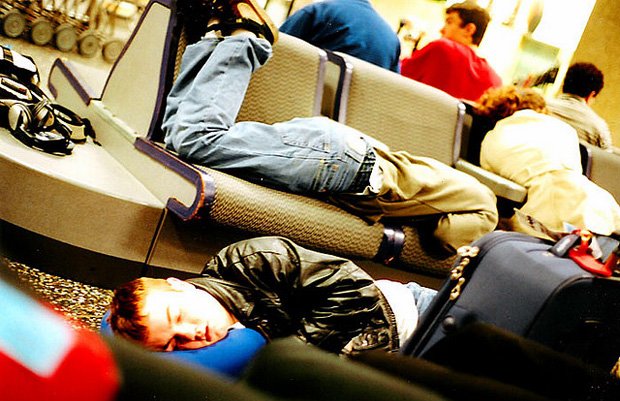
I know whereof I speak.  I only just returned from a trip which involved a nine-hour layover at Schiphol Airport in Amsterdam.  Which, I’m betting, is rather nicer than Sheremetyevo in Moscow.  It is a very peculiar kind of torture.

Passenger Ricardo Schnibblevits, traveling to Tashkent, please report to Gate A9 for immediate boarding, or your baggage will be removed from the airplane, and your reservation cancelled.

The single most important thing that makes such an experience bearable is the knowledge that it is only temporary.  Snowden is utterly bereft of this consolation.  He may glance habitually at his watch, but it tells him nothing of interest.  How many times can he walk from one end of the transit area to the other before he has it memorized?  How many greasy shashliks can his stomach endure before he contemplates a hunger strike just for the novelty?

What is he using for money?  Will his Starbucks card be accepted at Double Coffee?  All the little irritants, horribly magnified.  Like the armrest on the chair where he’s trying to sleep becoming a permanent part of his anatomy, or (shudder) Russian toilet paper.

Sheremetyevo Airport reminds you not to leave your bags unattended.  Unattended bags will be immediately confiscated for security reasons.

What country in its right mind would grant asylum to Snowden, thereby holding him up as an example of sterling behavior to its citizens?  Does anyone really believe a place exists among the nations of Earth that is not at least as bad as, if not worse than, the United States, in terms of secrets, of spying on its citizens, or of any one of hundreds of infringements, large and small, on dignity, not to say liberty?  I’ll grant you, many are not as up to date technologically, but that would only make someone like Snowden all the more dangerous to them.

Hero or traitor, he’s in the land of the Undead for the foreseeable future.  We’re not necessarily talking about days, or even weeks, here.  The world record for this kind of thing is held by Mehran Karimi Nasseri, who endured the departure lounge at Charles de Gaulle for 18 years.  That’s right, 18 years.

Passenger Rickky Platz, please return to the security check-in zone to reclaim your passport.  Passenger Rickky Platz.

In the same clothes.  The same underpants that drove him nuts riding up on the flight from Hong Kong.  How many bags of stale peanuts can one man endure?  I believe I would be on the phone to the US consul sooner rather than later.  In prison, there is at least the exercise yard.

Passenger Edward Snowden, please make yourself as comfortable as you can.  It will be awhile.

Publish, perish

“I really like your blog.  You should publish that stuff sometime.”

Ever hear that? It’s an interesting point, this question of what counts as publishing. Certainly, when you press the “Publish” button and send off your work to the ether, it is made public in a way that anyone can access. But is it publishing?

Put another way, would Walt Whitman, famous self-publisher, have been content to be a blogger?

Self publishing, except possibly for Walt, carries an onus to start with; that’s why vanity presses are called what they are. As if convincing a paying publisher somewhere of the value of your work removes vanity from the picture. Ultimately, WordPress, Blogspot, Tumblr, and even Facebook and Twitter are vanity presses, well within the usual meaning of the term. Walt would undoubtedly have been all over them.

So, what do people mean when they say you ought to publish your blogs? Two things, I think. First, there is a long standing distinction between publishing in a serial medium, such as a newspaper, magazine, or, yes, blog, and publishing a book. Dickens, Conan Doyle, Mitchener, all followed serial publication with book publication of essentially the same material. The distinction even allows, perhaps invites, revision. Serial publications are akin to drafts, in a sense.

The other thing people mean, however, goes to the heart of vanity vs. commercial publication: It’s not “real” unless you’ve convinced someone else that it’s worth an investment of time and money. The implication is that anything published commercially is better than anything self-published. A trip to any bookstore (if you can find one!) should disabuse you of that notion, but there it is. Commercial publication is still regarded as proof of value.

It’s not enough to have the heart of a poet; you need the soul of a salesman to really arrive. I wonder, though, how much of all this is changing, and how fast.

More heretical ideas

I could never understand the proselytizing impulse. After all, if one had the truth, wasn’t that the end of it? To be sure, there are some kind souls who would like to share heir good fortune, but that does nothing to explain the vitriolic view of infidels in general held by believers. Why this unreasonable insistence that people believe something, anything? Surely, if you believe yourself to have The Truth, all who failed to acknowledge that would be equal, whether they believed in a competing system or not. Finally, I think I have the answer. It came to me in a flash, like St. Paul. Lucky I wasn’t riding a horse.

If you’re pushing an agenda, you can’t count on anyone coming to your assistance on the basis of reason. Too unpredictable. You need blind faith for something like that. Similarly, it’s harder to predict the actions of another group if they’re being rational.

Reason is so fickle. Change one little fact and everything falls apart; worse, it’s impossible to know and take into account all possible factors. This is especially a problem when dealing with adversaries, who almost certainly have privy to facts which you do not. Ah, but true believers, that’s a whole different kettle of fish. You know straight up what they think, how they will react, and what their motivation will be. As for your own cohort, you can be sure of their support without lengthy and tedious rational explanation. All goes smoothly!

Now the only issue is to get rid of all those pesky infidels. You can’t count on them for anything.

Now there’s an idea…

I went to this restaurant in Riga.  Did I mention it was a family place?

Akumal 2010 015