Hark, the Harold!

The season being what it is, all thoughts turn to balls of holly, and the Wee Three Kings of Orion Tar.  And who could forget Guy d’Stew, thy perfect knight?  Let there be peas on earth.  Remember, tri-star Xavier was bored on Christmas day.

I’m dreaming of a wide Christmas, Gloria’s dreams, from havin’ a dove.  So let the belle’s own bobtails ring.  We’ll sing a slaying song tonight, while riding in a one whore soapen sleigh.  In the meadow, you can build a snowman, and pretend that he is parson brown.  Or any other color, for that matter.  In the immortal words of the beloved Carol:

Frosty the snowman
Had a very shiny nose
And everywhere that Frosty went
The lamb was sure to go!

There must have been some cabbage in that old top hat you found.

Christmas, they say, should be year-round.  In that spirit, when Autumn leaves, leave your cart in San Francisco and wake up in the city that never sweeps.  Let April impair us, in the summertime, when the lemon is easy.  In the moss cow nights, though London Bridget’s falling down, you can rock the cash bar.

Gloria, in egg shells, sees mayo!  We are one nation, invisible, with libertine justice for all.  So, as you embark on your journey through the glorious and ever-changing world, remember this:

Skip Tumaluma, darling.

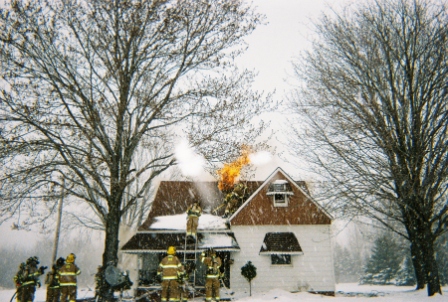
Marks Rd 2

Later on, Wilkins’ fire!

Photo credit: http://www.strongsville.org

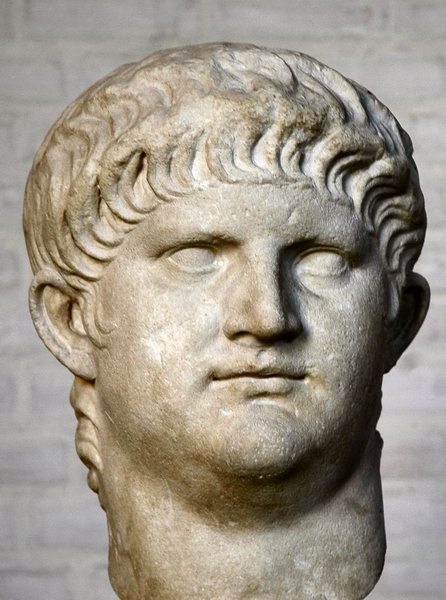
Nero’s fiddle

nero_mus_munchen

Ah, Nero, second only to Caligula, or perhaps, thanks to Hollywood, Commodus, among the Roman Emperors we love to hate.  Why, he fiddled while Rome burned.

Well, not really, since fiddles as such were a long way from being invented yet.  There was a rumor, though, perhaps started by Cassius Dio, certainly fueled by Seutonius, that when Rome caught fire and burned to the ground in 64CE, Nero climbed the Palatine Hill and “…sang the whole of the Sack of Ilion in his regular stage costume,” the aforementioned piece apparently being a long, theatrical declamation he had written (just for the occasion?).

What?  Regular stage costume?  Well, you have to understand the man.  Nero fancied himself a first class poet and playwright, a brilliant actor and dramatist, and, need I add, a superbly gifted athlete.  It was rumored that when he ordered his slave to kill him after he was driven from Rome by angry mobs and a smattering of generals, lacking the balls to do it himself, his dying words were “The world is losing a great genius!” or something to that effect.  He instituted regular festivals featuring contests of poetry, drama and music, which he himself inevitably entered, and just as inevitably won, since none of the judges fancied their chances if they declared for someone else.  This timorousness of judges extended to his athletic prowess as well.  He once entered the Quadriga,  a four horse chariot race, and the most prestigious of the races in the favorite athletic event in all of Rome, with a special chariot fitted with twelve, count ’em, twelve horses.  The judges conferred, and ruled that it was legal, having noted, I suppose, that twelve was a multiple of four, after all.  To be fair, he was leading into the turn-about (who would pass him?), but tipped over, surviving a horrible crash unscathed.  And victorious.  Those astute judges noted sagely that, well, he would have won, had he not tipped over, and awarded him the trophy.  In defense of the judges, it should be noted that more than one general lost his job, rank, and occasionally life, just for falling asleep during one of Nero’s poetry recitals.

So, the burning question (sigh) is, did or did not the man diddle, if not fiddle, while Rome burned?  It seems as though, if he did, he still had time to handle the situation honorably enough.  Tacitus wrote that he took in refugees from the fire at his own residence, and fed and clothed them, opening the substantial palace grounds to anyone in need.  So, if there was a fiddle, it was figurative, and much deeper, and here we get to the subject of who or what started the fire in the first place.

Fires in Rome were commonplace.  Just beyond the familiar temples and palaces of stone and brick, the city was a ramshackle jumble of rickety wooden structures.  Truthfully, even in the more substantial stone buildings, fire was a danger; remember, before electricity, heat and light were provided by fire.  The ubiquitous lamps used all over the city and beyond consisted of an open bowl filled with oil.  A wick was added, and the whole thing, when lit, provided ample opportunity for spillage and subsequent disaster.  Stone and brick were, all the same, filled with furniture, carpets, draperies – in short, fuel.  In the poorer quarters outside the central district, fires were so common and so dangerous that indoor cooking was forbidden.  More than one emperor capped his hallmark forum with a firewall against the slums next door.

Still, this particular fire had started suddenly, in an unusual place, and spread like, well, wildfire.  In the end, only a bit more than one fourth of the city escaped unscathed, with much of the central district destroyed completely.  And there’s the rub.

Nero had this area cleared, and built a fabulous new palace compound, the Domus Aurea, on the site.  It had a lake big enough to stage recreations of famous naval battles, and a statue of himself, as Sol Invictus, stood 30 meters (about 100 feet to us colonials) at the head of the grounds.  It was called the Colossus, and gave its name to the Coliseum that replaced his palace (a whole other story).  The name Domus Aurea refers to the centerpiece of this garden of splendor, the residence, with its dome covered with gold.  The dome was engineered to rotate, and the night sky was painted on the interior for the bemusement of dinner guests, who were sprayed with perfume and showered with petals on entrance.  True, other emperors before and after built lavish homes for themselves, but this particular effort sorely rankled, because Nero used public money to build it, on the grounds that it was essentially a city renovation project.

Truth to tell, there was precious little difference between public and private money where public officials were concerned, but each had its own pocket, and the populace cherished the fiction that they were separate.  Far from using public funds for their personal projects, high officials, and especially the emperor, were expected to spend their own money on public projects, as a show of magnanimity.  The lavish Domus Aurea  was a step too far, and it fueled rumors that Nero himself had set the fire, to rid himself of senate rivals, and clear the land.

To be fair, Nero had his own theory, and that was that Christians had set the fire in a sort of apocalyptic fervor.  The result was a very public campaign of persecution, leading, among other things, to the particularly venomous description of Rome in the Book of Revelations, generally supposed to have been written 30 years or so after the great fire, but could have been earlier. Well, to a lot of the Roman public, that seemed pretty likely, or at least plausible.  Nobody who wasn’t a Christian liked them very much.  They refused to honor the other gods of Rome, they hung around with slaves and other low-life, and they met in secret, where it was rumored that they partook of cannibalistic rituals.  If the fire wasn’t set by Christians, most people were content to let them get persecuted all the same.

Even some modern scholars believe that the idea of Christians starting the fire is not entirely out of the question.They got a lot of propaganda mileage out of the persecution, and laid the groundwork for expansion. Even so, it is the consensus now, as it was then, that it was either accidental, or set by Nero’s agents. But whether or not Nero was at fault, he certainly benefited from it, at least in the short term. He silenced most of his senatorial critics, and he got his magnificent residence in the middle of downtown Rome.

If there was a fiddle involved, that was it.
Congratulations: the incredibly improbable you

You’ve made it this far.  There were never any guarantees, were there?

Take the Big Bang, for instance.  By all accounts, this event should have resulted in equal amounts of matter and anti-matter, and we all know what that means.  Nothing.  A big, fat zero.  You put the two together, and that’s what you get, so for physicists, the old chestnut of why there’s something rather than nothing takes on a whole new significance.  For some reason, after the Big Annihilation, there was this miniscule (comparatively) amount of stuff left over; that’s us, and all we are in and around.

Even so, a lot of different things could have happened from there.  The laws of nature could have been different.  If gravity was just a tiny bit stronger, no sooner would the universe have begun to expand, than it would have collapsed back on itself.  No time for matter to come together slowly, forming stars while waiting for the Great Dissipation of entropy.  Which brings up another thing: if entropy is a law, if everything ends up at the lowest, most uniform possible state of energy, why wasn’t that the case immediately before the Big Bang?  It could have been.  It should have been.  But it wasn’t; big chunk of luck for us!

Even taking all of that ultimate origin stuff as a given, it’s been no cakewalk.  You start with a bunch of protons and electrons whizzing about the fledgeling universe, but because it’s not uniform, some of them clump together due to our friend gravity.  Actually, enormous clumps of them, so huge the pressure pushes them into units composed of two protons and electron each: helium atoms.  It’s fusion, and lumps of it were happening all over.  Altogether disorderly and un-entropic.  Worse yet, all that energy causes flares, explosions, various ways of ripping it all apart, with the result that bits of stars are flung out, kind of like bits of fur in a cosmic cat fight.  More and more atoms are forced together, and eventually you get all the elements we are familiar with, including the ones we are composed of ourselves.  Stars have clouds of gases and debris swirling around them.  Sooner or later, the same thing that brought the original matter together to make the stars begins happening in the debris clouds.  They start clumping up, and some get rather large, at least by our standards.  We call them planets.

Of course most planets, even the ones in our own little star system, with the notable exception of Earth, are places completely inhospitable for life.  The bulk of them are like Jupiter, Saturn and Neptune, great gassy blobs with no place to even stand on, let alone survive.  Even most that are solid enough to stand on are inhospitable, like Mercury, or Venus.  Just our little Earth is perfect, and it causes us huge headaches on occasion.  True, in the incomprehensible vastness of the universe, there are doubtless others like it, maybe even some better equipped for life.  But they are in a minority.  Just our luck we’re here.

Although, to be honest, even Earth was no picnic for much of its history.  Our lump of clay is a little more than 4.5 billion years old, and for almost the first half of that, its atmosphere was largely nitrogen and methane.  Don’t get me wrong; it was buzzing with life, little anaerobic  specs happily bathed in the major component of our modern farts.  How they came to be is a matter still hotly debated, but we’ll leave that, and the odds of it happening, aside.  Earth was a very warm place, indeed.  Then, catastrophe!

Evil, wicked, cyanobacteria arose, making energy directly from the sun via photosynthesis, and giving off as a waste product — oxygen.  It was a deadly poison, and the tiny microscopic newspapers of the day were full of dire predictions.  Just kidding.  Had they been, though, their predictions would have been all too true.  It’s said that this was by far the greatest extinction event the world has ever witnessed, killing off almost all of the existing life, leaving only the new photosynthesizers and a smattering of the older bits near ocean vents and the like.  Even they had it rough, though, because the sudden burst of oxygen turned almost all the methane into carbon dioxide.  The Earth cooled, and remained encased in ice – snowball Earth – for millions of years.

Well, there it is.  They’re still with us; they’ve become all the rich and glorious diversity of plants.  From our perverse point of view, or course.  We are essentially what’s become of alien invaders wallowing about in their own waste products.

I can’t begin to tell you all the trials and tribulations that followed.  For the next couple of billion years, the Earth vacillated between toasty warm and crippling cold, and all the range between, each shift engendering a new catastrophe for whatever life had grown accustomed to the previous conditions, and a marvelous opportunity for those few misfits who had managed to survive in spite of it.  You really should check out some of the incredible trials and errors along the way: hard-shelled predators with razor like appendages; floating masses of jello; tiny diatoms whose gazillions of weeny skeletons form the vast limestone deposits of Earth.  But let’s cut to the chase.

What with one thing and another, bilaterally symmetrical soft-bodied creatures with internal structures of calcium carbonate evolved: the vertebrates.  I mean, anyone care to calculate the odds?  One major theory of the evolution of skeletons is that organisms found a way to sequester the deadly calcium in their environment, and that that eventually was pressed into service as the internal skeleton, providing rigidity and support for locomotion and other kinetic activities.  Talk about making lemonade from the lemons you’ve been given.

You may think that by this point, we are well on the way to the obvious: us and all the clever world about us.  Not so fast.

Although you could make a case that in such a changeable, unreliable world as Earth, it was just a matter of time before an intelligent, generalized creature like the primates would evolve, we’re still a long way from ourselves here.  Even today, there are hundreds of primate species, with hundreds more having gone extinct.  It is said that at one point, about 60-50,000 years ago, Homo sapiens was down to a breeding population of fewer than a couple of hundred individuals.  We’ve all been squeezed through a very narrow funnel, my friends, which explains why we’re so damned alike.

Think of it.  A species comprised of many thousands, culled to a couple hundred.  Most humans died back then.

But not your ancestors, or mine.  The odds against any one of us being here are astronomical.  Since then, of course, we’ve burgeoned to a population of something over 7 billion.  All the same, countless ancestral lines have gone extinct since the big crunch of 60-50k alone.

But not yours, and not mine.  At any point along the vast expanse of time, from the first flicker of life to now, your personal ancestor organism might have been one of the countless gazillions that died without issue.  Congratulations.

Now, about those horrendous odds you say you’re up against…

Saints preserve us!

Pope Francis has put two of his predecessors, John XXIII and John Paul II, on the fast track to sainthood.  Well, alright, for all I know, they were fine people, and maybe deserve some recognition.  Setting aside for the moment the question of all the millions of other fine people who were their contemporaries, but not popes or even Catholics, I have a major quibble with the reasoning here.

According to the ancient rules of such things, to even get this far (beatitude) there has to have been an attested miracle.  This can vary widely, from healing the sick to simply not rotting in the casket.  In the case of John Paul II, there have been two alleged miracles, both involving inexplicable cures from incurable medical conditions after praying to him (while dead, of course) to intercede with God on behalf of the plaintiffs.

Here’s what’s weird.  Presumably, had JP II not been in heaven, all those pleas for intercession would have been for nothing, and the women involved would still be sick today, if they hadn’t died first.  But according to the Church, God is perfectly just.  The whole thing seems to resemble a lottery, in which your health depends not on medicine, or even on your personal faith or the extent of your prayers, but on whether you guessed right as to the eternal disposition of some dead person.

Of course, this is just a minor quibble, in the face of the idea that God, presumably the creator of the universe and hence all of the laws of physics, will suspend those laws on the request of someone from earth.  And not do it for anyone who doesn’t ask nicely, or even for the vast, vast majority of those who do.

Mysterious ways, indeed.

Into the wild

IMG_1011

Today, while wandering through the beautiful campus of Southern Illinois University – Edwardsville, I had the rare privilege of stumbling upon a herd of bicycle, gamboling on a hillside.  I quickly snapped a photo; I apologize for the focus, they were gone in a flash.  Still, I was able to notice a few thing that might be of interest.

As you can see, unlike their domesticated cousins, wild bicycles all have the same distinctive markings; I didn’t see any exceptions.  In addition, there was no size differentiation, such as we are used to seeing.  This is not really surprising; compare dogs and wolves, for example.

But the most notable thing was their joyful abandon, capering through the campus.  I wish we could re-instill that feeling in the domestic bicycles we all love!