
Humbled

What does it mean when someone says they are humbled by an experience?  Taken literally, it would mean they are made to feel more humble, which is to say less proud.  And yet, I would venture to say that most of us have never heard anyone use the expression in a context in which that makes sense, inasmuch it is almost universally used  on the occasion of receiving  an award. Usually, the humbling is accompanied by an expression of pride and gratitude.  The higher the honor, apparently, the more humbling the experience and the greater the pride.

There is only one sense in which winning an award can be a truly humbling experience, and that is if it is undeserved.  Do you feel that your accomplishments are trivial compared to the work of other recipients?  Was the award completely unexpected because you think of yourself as just getting the job done in a workmanlike way, nothing special?  Do you feel that if the award committee looked back over your record they’d have to reconsider choosing to honor you?  Is the contribution of others unfairly minimized by their exclusion?

These are all perfectly normal reactions, whether valid or not.  They are also utterly inconsistent with pride, and the kind of gratitude that would be appropriate in this context smacks of favoritism and ulterior motivation.

If you truly feel humbled, the most honorable thing to do is to turn down the award and explain your reasons.  If, after mulling things over, you decide you deserve the award after all, accept it with grace and pride, never mind the false humility.  If you still feel the award is undeserved, but it would create awkwardness for the committee to turn it down, well, you’re in a fine pickle, aren’t you?

It’s ironic, to say the least, that when someone actually does turn down an award, they are almost always criticized for being too full of themselves.

In truth, I suspect that most of the time it is simply formulaic, the right thing to say in the same way that people say “pleased to meet you,” or “sorry for your loss.”

But I can’t help it.  It’s my duty as a curmudgeon to harp on these things.
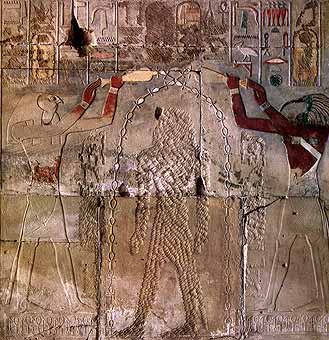


The king is dead! What king?

In 1478 BCE, give or take a year, Hatshepsut ascended to the throne of Egypt, her recently deceased husband, the Pharaoh Thutmose II, leaving as heir only his infant son, Thutmose III. Thutmose II, the son of Thutmose I by a secondary wife, married Hatshepsut, the daughter of the same Thutmose I (bear with me here) because she was T. I’s daughter by his primary wife, and thus had a stronger claim to the royal lineage. T.II thought, apparently, that this would cement his position permanently.

It worked, sort of. The only thing is, Hatshepsut was a much better leader than her husband, and when he died after a decade or so, she took control and refused to let go, even after T. III got old enough to rule on his own. I always thought of Thutmose III as being kind of like poor old Prince Charles, whose mom refuses to step down so he can be king.

In any case, Hatshepsut finally kicked the bucket around 1458 BCE, having had an illustrious career as only the second female pharaoh that the Egyptian chroniclers would admit to, and Thutmose III finally got his shot. But his Aunt Hattie’s reign must have stuck in his craw, because eventually either he or his son Thutmose IV (AKA Amenhotep II; are you still with me here?) set about obliterating as much of the record of her accomplishments as he could. This was no mean task, since royal memoirs in those days were literally carved in stone.

Which brings me to Donald Trump and the Republican Congress (nice transition, eh?). It will not do for a man of Trump’s boundless ego to succeed someone who, well, succeeded. So, in cahoots with the congress, which has been doing its level best to make Obama a failure, and failing at that, Trump will try to see to it that any vestige of Obama’s success be obliterated.

The process has already started with an executive order cancelling unspecified parts of the health care act, and will soon continue with more executive orders.

Care to take any bets the congress will suddenly stop whining about the “imperial presidency?”

We well might ask how effective this kind of exercise is. Did it work in ancient Egypt? Ironically, two and a half millennia later, Hatshepsut is not only remembered, but honored as one of the most effective pharaohs Egypt had.

I suspect Obama’s reputation will be restored much sooner than that.  His accomplishments may not be carved in stone, but I predict it won’t be long before people start pining for the good old days when he was in charge.

A little private note

Here we are on the internet, where we have freely given up almost any semblance of privacy, and not for some grand principle, but mere convenience. We chat blithely away on Facebook, buy whatever catches our fancy, and generally carry on without a care in the world. Our entire lives down to the length of our toenails can easily be stitched together, and private corporations own all this data, and freely pass it around to each other. We know this because when we spend 10 minutes looking at, say, nose warmers on Amazon, we’re inundated with advertising for them everywhere else we look online. We even start getting catalogs in the snail mail specializing in nose warmers. But, hey, it helps us get the best possible nose warmer, in a color we’re sure to like, so it’s worth it. Don’t protest, you know it’s true.

Of course, it makes us feel like idiots, so we complain bitterly on, you guessed it, the same forums that collect all this information and sell it in the first place. Just one more little useful piece of data to round out your online portrait. Why did you think it was free?

In a nutshell, there is enough of your data floating around in the ether to completely reconstruct another you, should the occasion arise. Oh, well, we’ve always pined for immortality.

Understandably, the government would like to have access to this information, too; who could resist? But that’s where we draw the line, by God! Let every entity on Earth have access to the minutest, most intimate detail of our blessed existence, but not the government, no sir.

Of course, we’re also outraged when they fail to detect a terrorist plot in time to do something about it.

Or when we eat our cake, and discover there’s none left.

How red meat is like … red meat

I go through long periods when I just can’t seem to finish anything: poetry, fiction, essays, it doesn’t matter. I work at it. I take notes, jot down ideas, begin paragraphs, sit in coffee shops streaming my consciousness. No matter how promising it looks, or, in desperation, how passable, I just can’t seem to pull the trigger. It’s a log jam (I won’t use the more obvious metaphor, although, as you’ll see, it’s more appropriate).

Then something comes along that just pushes the rest of it through willy-nilly.

For the last couple of days, the news has been all over social media that WHO has declared red meat to be “probably” carcinogenic. Vegan friends are beside themselves crowing, rubbing our faces in it with a vicious glee. There is nothing more likely to raise the hackles of the normal person.

Sometimes, though, it’s better to let sleeping hackles lie. The rest of us might experience that rare motivation to check things out for ourselves, rather than believe the first meme that comes along.

First of all, WHO has also declared the night shift to be probably carcinogenic. It’s not exactly an exclusive category. It’s just a statement of statistical fact; no attempt is made to judge how much of a danger it really represents

In the case of red meat, it seems that daily consumption of more than 100 grams is correlated to a 25% or so (the figures vary, depending on what you’re reading) increase in the incidence of colorectal cancer. “Yikes!” you might say. But what does this actually mean?

For some reason, WHO appears to have conflated processed meats with red meat for this study, so it’s difficult to assess either category by itself. It also appears to have ignored other lifestyle factors, but let’s go with what we’ve got.

The incidence of colorectal cancer in the general population is about .04%. Eating red meat raises your chances to a whopping .05%; that’s right, an increase of .01%.

Friends, you are more likely to die driving to the grocery store to buy the red meat than you are from eating it.

The long, long silly season

Hard to believe, but it’s still over a year until the election we’re all obsessing about. That’s more than enough time for all the current front runners to fade away, and for new ones to emerge from nowhere. Meanwhile, we’re filling Facebook, Twitter, and, yes, blogs, with not so much political opinion as ad hominem. Never have slings and arrows so thoroughly disdained outrageous defeat. Have at them now, lads, if they disappear, you’ll have missed your chance to smite those who disagree with your clan. Come to think of it, disagreement isn’t even necessary, just designation as the Enemy.

The worst part of all this is the ugly deterioration of discourse in social media. Of course, the bar was never set very high to begin with, but now it’s steadily approaching negative numbers. More like limbo than the high jump. How low can you go?

There’s an insidious dynamic at work, one which, I admit, has affected me at times as well. You make some statement, simplistic because, in the buzz of the moment, you don’t feel like putting in all the nuance, all the exceptions and caveats. Besides, what sells on social media is the punchy one-liner. In any case, you assume your friends will get all that, because they know you so well.

But then, it turns out they don’t. Someone responds with an objection, which itself ignores nuance, the better to firmly repudiate the shallowness of your post. In other words, by this point, the two of you have posted opinions that, although you generally find the gist agreeable, you do not wholly buy into. It could stop right there, and often does. All it takes is one side or the other opting out.

But sometimes, you just can’t seem to leave it alone. You feel wounded; it’s a kind of betrayal for a friend to think you would actually believe such simplicity. How could they, especially since their response is just as trivial? Besides, you’ve thought of a zinger that will stop the whole process by making it clear you have the superior position.

You’re off and running. The “debate” slides further and further into sheer defensiveness, until each of you finds yourself fiercely defending a position you would never have even acknowledged before things got out of hand. Worse, a friendship is threatened over what usually amounts to a difference in nuance.

With any luck, something truly horrific hits the news just then, and the two of you can come together on what dangerous lunatics the other side are.