Are we being controlled?

I’m seeing a lot of stuff out there in blogland, from people I generally respect, about the great conspiracy to control us. The government is reading our emails to Aunt Sally, to find out exactly when and where we will meet for dinner. Corporations are conspiring to dictate our very desires, our taste in everything from clothes to music. People, we are being led to the slaughter like so many bovine schlemiels. Resistance is futile.

Except a few of us, small in number, but grand in courage and determination, have been able to see through it all. We few are smarter than all the sheep in America, hell, the world. They are being diabolically controlled, and don’t even know it, but we geniuses have their backs!

The exact nature of this forcible brainwashing is variable.  A lot depends on what it is that we, as individuals, are having trouble being successful (okay, rich) at.  Personally, I am pretty sure that, since I haven’t made a dime on poetry, that the combined forces of the government and industry have made it their mission to make people believe it’s not good enough.  Literary magazines are in on it as well; you can tell from the poems they publish, which I personally can’t make head nor tail of.  They don’t publish mine, therefore depriving the ignorant but somehow noble masses from seeing them.  And paying me lots of money.  Justin Bieber and Billy Collins are both in on this as well.

Bob Dylan probably started the whole thing.

Born yesterday

I’m up in Sault Ste. Marie, MI, in a little gift shop near the great locks that pass ships between the high waters of Lake Superior and the lower Lake Huron, bypassing the St. Mary’s River rapids (sault in French).  A thousand-foot Great Lakes freighter is passing by, on her way to the locks.  A much smaller boat is ahead of her, looking for all the world like a leading dolphin, and someone asks, “Is that a pilot leading the freighter to the lock?”

“No, that’s your $10 million government boat,” answers the clerk, with a knowing smirk.  We’re supposed to smirk back in that knowing way we have when we don’t actually know, but suppose the speaker does.

“Coast guard?”

“Homeland Security.”  This with more of a smirk.  We’re all in the know here; the government can’t pull the wool over our eyes!

“I’ve heard,” the clerk continues, “that they can read your credit card from a mile away.”

That does it.  I’m all over it.  “Who told you that?” I ask.  “That’s ridiculous.  They would have to be within at least ten feet, and that’s only if your card has an RFID, which most don’t.”

That earns me an icy glare, and I just give up and leave.  The clerk’s ignorance of government snooping capabilities is apparently only surpassed by her smug certainty.  Never mind the “$10 million dollar boat” and whether Homeland Security had any business hanging around the Canadian border.

You see this sort of thing more and more these days, this smug rumor mongering, this assumption that we can see through the transparent lies of the government, or big business, or whatever dragons we’re onto.   Everyone’s a hipster these days.  But the skepticism of the hip has become the cynicism of the wannabe, a much easier posture, since it doesn’t require one to actually look into anything, to research it, to know it.  We’re engulfed in hipness, swept away by the deluge of the media we’re addicted to.  Music, film, even books all drone away on the exposure of Big Lies,  But in this anxiousness not to be duped, this obsessive non-rubeness, we are often fed only alternate lies, which, ironically, we accept without question.

By now, you may be thinking I’m in favor of government snooping.  You’re wrong.  I am concerned about it, and I believe we need to seriously consider laws curtailing it.  More to the point, we need to stop giving up all that information to the sacred Private Enterprise that is making it available in the first place.  But we need to get a grip on reality first.  Do you really believe all those loyalty cards are there to make life better for consumers?

Up here in the Soo, as it’s called, people love grousing about the government, which they are convinced exists only for the purpose of taking their money for no return.  Never mind that the wicked bogey-man government supplies virtually all of the employment here, what with the locks, the Air Force base, and the Lake Superior State University, just to name a few.

Well, sure, people say, but there used to be the carbide company, the coal company, shipping companies, all that glorious Private Enterprise, you know, that people worked for.

Well, those lovely businesses all left town, dear people, not because they weren’t making money, but because they weren’t making enough money.  The basic fact about business is that it is all about making the most money possible.  Those fabled mom-and-pop businesses that were run out of town by evil Walmart?  Before that, they had virtual monopolies on your bucks, and as often as not were  gouging you for them.  You knew that, of course, because you switched to Walmart quicker than a three card monte dealer as soon as you got the chance.  Essentially, you drove them out of business, not Walmart, which would dry up and blow away for lack of money if everybody who hated it would stop shopping there.

Same goes for big government.  We’re all for cutting spending, unless it’s something that benefits us personally.  A boondoggle is a project that benefits somebody else.  Let’s face it, we’re not deep thinkers on that account, either.

Similarly, we’re up in arms if the NSA misses a clue, and something gets blown up by terrorists, and then complain that they’re snooping too much when it turns out they’re tapping information we’ve happily provided to businesses, whose stated sacred charge is to get as much money from us as possible.

We cannot get reasonable government until we become reasonable ourselves, and we cannot become that by automatically believing or disbelieving anything.

I hate to spring this on you so late in your life, but you are going to have to work at democracy, if it’s going to make it.  Ignorance just won’t cut it.

Egypt’s lesson for America

The term of President Mohamed Mursi ended abruptly Wednesday, as the Egyptian army took control, arrested him, and declared his government over.  A coup, in plain words, toppling the country’s first democratically elected president from power.  We should be outraged.

Or should we?  Mursi’s missteps, succinctly recounted in this Reuters article, seemed to almost ensure his demise, but incompetence, even recalcitrance, alone doesn’t justify annulling a popular election.  What doomed his regime, and what, to me, provided reasonable cause for his removal, was his November 22 hijacking of the constitutional assembly process.  On that day, he assumed for himself emergency powers, by which any and all oversight of the assembly, previously packed with his Muslim Brotherhood compatriots, was crushed.  This included any discussion of the packing itself.

When the assembly predictably returned a constitution leaning heavily toward Islamist principles, the public rebelled, and took to the streets once again.  Mursi’s response: quell the demonstrations, force an early referendum, before the opposition had a chance to organize itself, and ram the new constitution through.  Every move after that was right and proper, according to the new constitution, but if the constitution itself is suspect, such legality is moot.

Mursi’s victory was on the slimmest of margins, and was largely the result of the disunity of the opposition.  As it was, he was forced into a runoff against Ahmed Shafik, who was arguably handicapped by having been Prime Minister under Hosni Mubarek.  Shafik still managed 48.3% of the vote.

This is the crux: having won by a small margin, Mursi proceeded to rule as if he had a crushing mandate, assuming emergency powers when conventional channels disfavored him, and thoroughly ignoring any of the concerns of the opposition, accusing them instead of subversion.  No compromise.

So, the burning question is, is democracy simple majoritarianism?  We hear a lot about majority rule with regard to democracy, but is that all there is to it?  In the United States, the constitution, specifically the Bill of Rights, declares otherwise.  The very concept of rights quite bluntly limits the power of the majority to enforce its will, and protects minorities from its ill will, right down to the individual.  I use the term “minority” here in its strict sense, not the political sense of identifiable interest group.

But on a subtler level, the implication is that the interests of such minorities must be taken into consideration by the leaders elected by the majority, even when swept into office by groundswell.  Still more, when the margin of majority is as thin as spring ice.

Which brings us to the infamous gridlock of American politics.  It is grounded on the idea that, in a democracy, the winner takes all, that it is unnecessary, even irresponsible, to compromise with the losers.

We seem to have a lot of Mursis in American politics these days.  Let’s take Egypt’s fate as an object lesson, and avoid that treacherous path.

Snowden in purgatory

Right now, the number one thing for which I am most grateful:  I am not Edward Snowden.

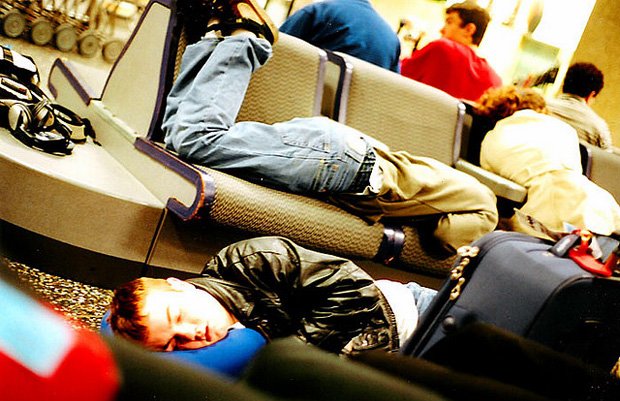
I know whereof I speak.  I only just returned from a trip which involved a nine-hour layover at Schiphol Airport in Amsterdam.  Which, I’m betting, is rather nicer than Sheremetyevo in Moscow.  It is a very peculiar kind of torture.

Passenger Ricardo Schnibblevits, traveling to Tashkent, please report to Gate A9 for immediate boarding, or your baggage will be removed from the airplane, and your reservation cancelled.

The single most important thing that makes such an experience bearable is the knowledge that it is only temporary.  Snowden is utterly bereft of this consolation.  He may glance habitually at his watch, but it tells him nothing of interest.  How many times can he walk from one end of the transit area to the other before he has it memorized?  How many greasy shashliks can his stomach endure before he contemplates a hunger strike just for the novelty?

What is he using for money?  Will his Starbucks card be accepted at Double Coffee?  All the little irritants, horribly magnified.  Like the armrest on the chair where he’s trying to sleep becoming a permanent part of his anatomy, or (shudder) Russian toilet paper.

Sheremetyevo Airport reminds you not to leave your bags unattended.  Unattended bags will be immediately confiscated for security reasons.

What country in its right mind would grant asylum to Snowden, thereby holding him up as an example of sterling behavior to its citizens?  Does anyone really believe a place exists among the nations of Earth that is not at least as bad as, if not worse than, the United States, in terms of secrets, of spying on its citizens, or of any one of hundreds of infringements, large and small, on dignity, not to say liberty?  I’ll grant you, many are not as up to date technologically, but that would only make someone like Snowden all the more dangerous to them.

Hero or traitor, he’s in the land of the Undead for the foreseeable future.  We’re not necessarily talking about days, or even weeks, here.  The world record for this kind of thing is held by Mehran Karimi Nasseri, who endured the departure lounge at Charles de Gaulle for 18 years.  That’s right, 18 years.

Passenger Rickky Platz, please return to the security check-in zone to reclaim your passport.  Passenger Rickky Platz.

In the same clothes.  The same underpants that drove him nuts riding up on the flight from Hong Kong.  How many bags of stale peanuts can one man endure?  I believe I would be on the phone to the US consul sooner rather than later.  In prison, there is at least the exercise yard.

Passenger Edward Snowden, please make yourself as comfortable as you can.  It will be awhile.

Publish, perish

“I really like your blog.  You should publish that stuff sometime.”

Ever hear that? It’s an interesting point, this question of what counts as publishing. Certainly, when you press the “Publish” button and send off your work to the ether, it is made public in a way that anyone can access. But is it publishing?

Put another way, would Walt Whitman, famous self-publisher, have been content to be a blogger?

Self publishing, except possibly for Walt, carries an onus to start with; that’s why vanity presses are called what they are. As if convincing a paying publisher somewhere of the value of your work removes vanity from the picture. Ultimately, WordPress, Blogspot, Tumblr, and even Facebook and Twitter are vanity presses, well within the usual meaning of the term. Walt would undoubtedly have been all over them.

So, what do people mean when they say you ought to publish your blogs? Two things, I think. First, there is a long standing distinction between publishing in a serial medium, such as a newspaper, magazine, or, yes, blog, and publishing a book. Dickens, Conan Doyle, Mitchener, all followed serial publication with book publication of essentially the same material. The distinction even allows, perhaps invites, revision. Serial publications are akin to drafts, in a sense.

The other thing people mean, however, goes to the heart of vanity vs. commercial publication: It’s not “real” unless you’ve convinced someone else that it’s worth an investment of time and money. The implication is that anything published commercially is better than anything self-published. A trip to any bookstore (if you can find one!) should disabuse you of that notion, but there it is. Commercial publication is still regarded as proof of value.

It’s not enough to have the heart of a poet; you need the soul of a salesman to really arrive. I wonder, though, how much of all this is changing, and how fast.