Infinity

DCP_0696

In Egypt, where almost everything we know, love and hate first began, there is a place called Gizeh, “by the high place, ” in Arabic.  Here is where Khufu, son of Seneferu,  of the fourth dynasty of kings of  Kemet, built his tomb.  It was strong and precise, to serve as the home of Khufu, who was Horus while living, and would be Osiris afterwards.  People counted on him to be their emissary from the land of the living to the vast and brooding underworld, at least until the next king died.

The living and breathing land of Kemet, the Dark Earth, was but metaphor for the cosmic truth of creation, power, betrayal and redemption that was the real world.  Well, not redemption, exactly; more like accommodation.  Those Egyptians were practical, if anything.  But that story, of sibling rivalry and savage butchery, along with countless others of conspiracy, duplicity and ultimate justice, is for another time.  Suffice it to say that in the Egyptian version of eternal truth, when power and glory clash with pragmatism, it’s pragmatism every time.

But this is a personal story, my story.  Some years ago, I visited Khufu’s pyramid with a group I was supposed to teach something to.  We were allowed inside, and climbed to the so-called king’s chamber.  I say so-called, because in spite of elaborate steps to safeguard the room, and the presence of a granite sarcophagus therein, Khufu was really buried in a secret chamber deep below.  To no avail, as it turned out, as the tomb was robbed almost immediately.  Have I mentioned the Egyptians were pragmatic folk?

It’s a bit unnerving, deep inside a hole burrowed into six million tons of limestone.  If you look up to the ceiling of the chamber, you see a great crack extending through the rock from one side to the other.  I wouldn’t call it worrying, but it’s not reassuring, either.  Our group leader announced that he had arranged for the modern electric lights and ventilation system to be turned off for a few minutes, to allow us to fully savor the experience.  He asked us to lie down on the floor, or sit if we preferred; he then donned his nemes ( the royal headwear), grabbed his crook and staff, and lay down inside the sarcophagus.  Don’t ask.

The lights went out, and the hum of the great fans slowly stopped.  No one spoke;  I swear no one even breathed.  For – how long? – there was nothing, absolutely nothing.  I have never experienced such darkness and silence.  Then a remarkable thing happened.  Six million tons of enormous, closely fitted limestone blocks ceased to exist.  I felt liberated not only from the walls of stone, but the walls of flesh and bone that surrounded me.  My body and the vast, trackless universe merged.  The stars were invisible to me, of course, but I could feel them, and the long gamma scream of the great black holes, the ancient bones of galaxies.

Someone coughed.  The lights haltingly came back on, the ventilation fans scraped to life, and all that rock wearily resumed existence.
Life on the Mississippi

In a dusty, fading memory of a National Geographic of my youth, among the bare-breasted African ladies and stripe-shirted Parisians, there is a sunny picture of a lad on a raft, his toes swirling the Mississippi River.  His father had taken him out of school for a year of rafting on that mythic Father of Dreams, if not waters.  Why could not I have a father like that, I grieved.

My own father thought peace, not adventure, was the greatest gift.  He was born and grew in Latvia, in a forest of kin, as much a part of his place as the oak trees planted for the native sons.  A small stone house, a well, three oaks and a horizon of fields.  A burial ground nearby sheltered his ancestors on both sides; their names are gone now, weathered away like the wooden crosses that marked their graves.  But he was there, where he belonged, in the embrace of family, living and dead.

When I was a boy, I would stand in front of the door of my house, looking outside, wishing and wondering.  I think he was like that.  Bye and bye, whatever was beyond the fields of oats and rye beckoned, and he answered.  In a fit of irrational exuberance, he joined the army.

Not bad, really, at least at first.  It was a free country, for that brief period between the great wars, and nothing for soldiers to do but dream of dying under foreign skies, all brave and noble.  They certainly had the songs for it.  He went off to Riga, to the War College.  It was a blast.  Bright lights, big city, no way to keep him down on the farm after that.  He married a girl with an eighth grade education and a mind that was quicker than a hare chased by two foxes and an alley cat.  No slouch himself, he thought she was normal.  They had a couple of children.  You know that feeling, in a dream, when you’ve climbed to the highest peak to look at the world, and you turn around to discover the mountain has disappeared while you weren’t paying attention?

Russians.  Germans, then Russians again.  The world was in one of its fits.  This part of the story is a haze of half glimpsed hopes and fears, mostly projections on my part.  Like one of those stunts on a magician’s stage : a loud noise, a lot of smoke, and when it all clears, everything is different.    In a camp in Germany, full of shattered dreams, I was born, much to the chagrin, I’m betting, of my brothers.

The father I knew had had enough adventures, thank you.  He had made some promises to God when all else had crumbled; he did his best to see that his children fulfilled them.  Keep this in mind when you promise things to God: don’t involve others.  Faust probably had a better deal.

These days, I live near the Mississippi, and occasionally, when I drive upriver, I see that kid on the raft in my mind.  I’m older now than my father ever got.  I hope I’ve done as well as he did.

Gates

???????????????????????????????
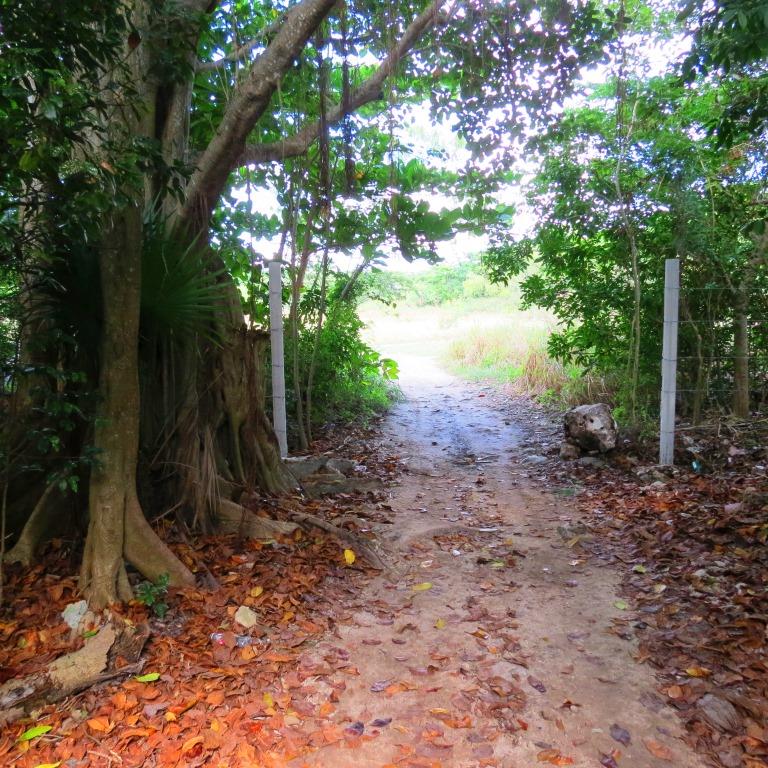
You stand before a gate.  It’s a good day, and the path leads forward.  Behind you lies the road you’ve traveled on to get here; it’s familiar and well worn.  In some ways, you know it better than you know yourself.  You’ve often retraced your steps to get a better look at some particularly odd stone, or a root pushing up through the pathway you almost stumbled on, or just to make sure you hadn’t made a wrong turn back there, where a smaller, overgrown branch held momentary appeal.

Every so often, broken twigs signal a point where you wandered off into the woods, following butterflies, snakes, or other demons.  It was wild and reckless in there; you didn’t stay long.  You wonder if it might be good to push a bit further in, before you leave the woods.  But it’s getting late in the year; some leaves have already turned, and some of the charm has already diminished.  It’s chilly, and your feet hurt.

Up ahead, the sun is out, beckoning like a lost lover.  You see traces of green, a clearing, a place to know where you are, precisely.  There are even more woods beyond that.  This old forest path is kind; adventures are kept to the edges, like handouts at a festival of life.  Some lie strewn at your feet, already discarded.   Hard to make out, though, exactly what’s up there, there’s so much light, and your poor eyes are accustomed to the shade.  There’s still time; what to do?

Hey folks, just to let you know, I have another blog, on Blogspot (out come the crosses and garlic)  It’s called “Exiles Child” www.exileschild.com/   Poetry there.  It started out a mix of prose and poetry, but I spun off this site for the prose, pictures and what-not.  I kept Exiles Child for poetry.  You might even like it.

Lizards and the English

Let’s say you’re an Englishman, and from a long line of them.  As far back as you can reckon, your ancestors, on both sides, were from England.  None of this mucking about in Scotland or other foreign parts  One of your ancestors was there to greet the Angles when they arrived.  Another shoved his pike up poor Richard’s bum at the Battle of Bosworth.  You speak the Queen’s language, drive on the left side of the road, and you think Majorca is too damned hot, Brighton is fine, thanks.  In other words, you are bloody well English.

Another guy is decidedly not. He’s from Tiko-Schmiko somewhere south of the Solomans.  Not only are all his ancestors also from there, but no one has ever been known to leave there.  He worships crabs, and pours lizard piss on sacred stones to make it rain.  In short, he is a typical Tiko-Schmikian.

“Holy cow!” you say (your religion is sometimes amusing), “we are so different, I cannot even grasp the magnitude of the difference!”

Indeed.  In what sense are you so different, then?  Not genetically; you are probably about 99.9% the same genetically.  Of course, you’re about 60% the same as a chicken, but we’ll leave that aside for now.  Culturally, then?  After all, it’s not what you’re born with, but what you do, dammit!  England has art, religion, music, the conservative party.  What have they got down there in god-forsaken Tiko-Schmiko, for Chrissake?

Well, they have art, religion, music, and .. well, okay, not the conservative party.  They do have a rather prissy old fart, though, who’s always ranting about how the kids these days don’t know lizard piss from lemonade.

The English, at least, do know that.