
Gates

???????????????????????????????
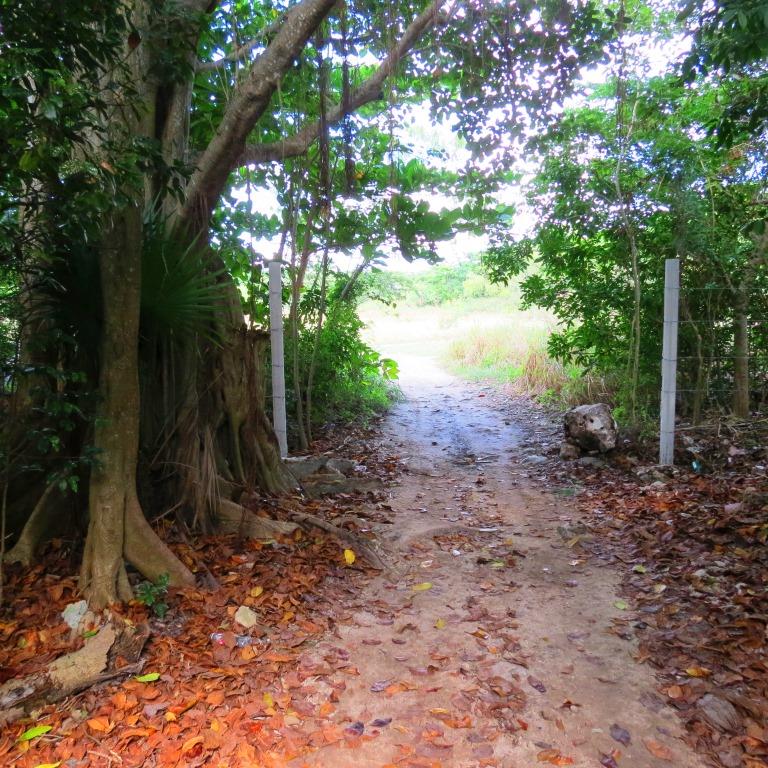
You stand before a gate.  It’s a good day, and the path leads forward.  Behind you lies the road you’ve traveled on to get here; it’s familiar and well worn.  In some ways, you know it better than you know yourself.  You’ve often retraced your steps to get a better look at some particularly odd stone, or a root pushing up through the pathway you almost stumbled on, or just to make sure you hadn’t made a wrong turn back there, where a smaller, overgrown branch held momentary appeal.

Every so often, broken twigs signal a point where you wandered off into the woods, following butterflies, snakes, or other demons.  It was wild and reckless in there; you didn’t stay long.  You wonder if it might be good to push a bit further in, before you leave the woods.  But it’s getting late in the year; some leaves have already turned, and some of the charm has already diminished.  It’s chilly, and your feet hurt.

Up ahead, the sun is out, beckoning like a lost lover.  You see traces of green, a clearing, a place to know where you are, precisely.  There are even more woods beyond that.  This old forest path is kind; adventures are kept to the edges, like handouts at a festival of life.  Some lie strewn at your feet, already discarded.   Hard to make out, though, exactly what’s up there, there’s so much light, and your poor eyes are accustomed to the shade.  There’s still time; what to do?

Hey folks, just to let you know, I have another blog, on Blogspot (out come the crosses and garlic)  It’s called “Exiles Child” www.exileschild.com/   Poetry there.  It started out a mix of prose and poetry, but I spun off this site for the prose, pictures and what-not.  I kept Exiles Child for poetry.  You might even like it.

Lizards and the English

Let’s say you’re an Englishman, and from a long line of them.  As far back as you can reckon, your ancestors, on both sides, were from England.  None of this mucking about in Scotland or other foreign parts  One of your ancestors was there to greet the Angles when they arrived.  Another shoved his pike up poor Richard’s bum at the Battle of Bosworth.  You speak the Queen’s language, drive on the left side of the road, and you think Majorca is too damned hot, Brighton is fine, thanks.  In other words, you are bloody well English.

Another guy is decidedly not. He’s from Tiko-Schmiko somewhere south of the Solomans.  Not only are all his ancestors also from there, but no one has ever been known to leave there.  He worships crabs, and pours lizard piss on sacred stones to make it rain.  In short, he is a typical Tiko-Schmikian.

“Holy cow!” you say (your religion is sometimes amusing), “we are so different, I cannot even grasp the magnitude of the difference!”

Indeed.  In what sense are you so different, then?  Not genetically; you are probably about 99.9% the same genetically.  Of course, you’re about 60% the same as a chicken, but we’ll leave that aside for now.  Culturally, then?  After all, it’s not what you’re born with, but what you do, dammit!  England has art, religion, music, the conservative party.  What have they got down there in god-forsaken Tiko-Schmiko, for Chrissake?

Well, they have art, religion, music, and .. well, okay, not the conservative party.  They do have a rather prissy old fart, though, who’s always ranting about how the kids these days don’t know lizard piss from lemonade.

The English, at least, do know that.

Clean as a whistle

In a winter of forty-odd years ago, I lived on the island of La Gomera, in the Canaries.  A beautiful place, largely undiscovered by tourists, which is to say, people like me, it was full of delightful little discoveries.  The Canary Islands in general were more than just a place for Germans to get their winter tans.  Columbus set sail for God knew where from there – from La Gomera, in fact – and there remained a mysterious connection to the Americas.  The post office in Santa Cruz de Tenerife had three after-hours mail slots: domestic, foreign, and Venezuela.  When I asked why Venezuela, I got a blank stare, as if I had just inquired as to the purpose of shoes.

Anyhow, back to La Gomera.  The island had one hair-raising road, three villages of any size, and about as many distinct ecosystems, all crammed into a mountainous terrain that took your breath away.  In the middle was a rainforest, as unlikely as spats on a cat.  A bus driven by an escaped lunatic made the run from San Sebastian, the capital, to Valle Gran Rey twice daily.  The trip encompassed the entire length of the road, and half the island.  If there were any foreigners on board, the driver served as a tour guide as well.  “This spot,” he would say (in Spanish of course) as the bus skidded on loose rocks on the outside of a curve above a sheer drop, “is where five buses have gone over the edge.”  And off we would speed, pedal to the metal, while the passengers swallowed their hearts again.

But this story is not about that, or any of the other dozens of endearing habits of chauffeurs on the island.  It’s about whistling.

Well, you should have guessed, from the title.  Because of the rugged terrain, people had trouble communicating; they could often see each other across a sheer gulf, but their voices wouldn’t carry.  They could whistle, though.  In Spanish.

“Pedro,” they would whistle, “how’s it going?”  “Eugenio,” would come the reply, “don’t ask!”  Neat.  This is the only place in the world without a tone language that used whistling to communicate over large distances.  At least in Spanish.  The technique was simple: just whistle and try to speak at the same time.

Of course, the habit has long since died out, what with cell phones and what not.  But the rainforest in the middle of the hills has a lot of mockingbirds.  When I was there, you could still go walking in the woods and occasionally hear, “Eh, Roberto,” or “Pablito!”

“You stole my goat, you son of a bitch.”