The “What if” series continues…
What if the clothes in those old black and white photographs were actually garishly colored? Have we totally misinterpreted those facial 0expressions?

Certainly not Henry V, of anywhere
The “What if” series continues…
What if the clothes in those old black and white photographs were actually garishly colored? Have we totally misinterpreted those facial 0expressions?
Certainly not Henry V, of anywhere
This is the first of a long, tedious series of posts speculating about how things might have come out, had history taken a different turn. Hang on to your hats!
What if the English, under the leadership of Henry V on that fateful St. Crispin’s Day in 1514, had defeated the French at Agincourt?
Oh, wait, they did,
Never mind.
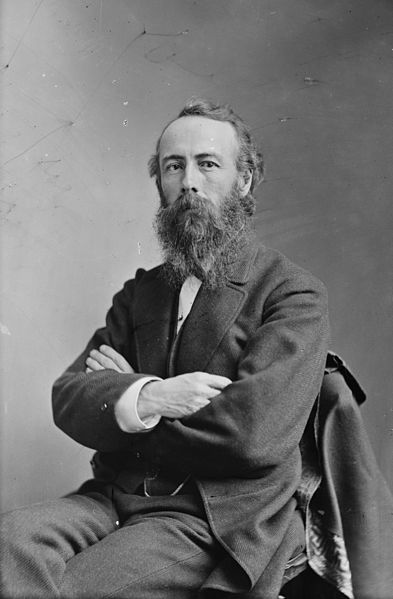
Not Henry V of England
Photo credit: https://commons.wikimedia.org/wiki/File:Henry_V_Boynton_arms_crossed.jpg
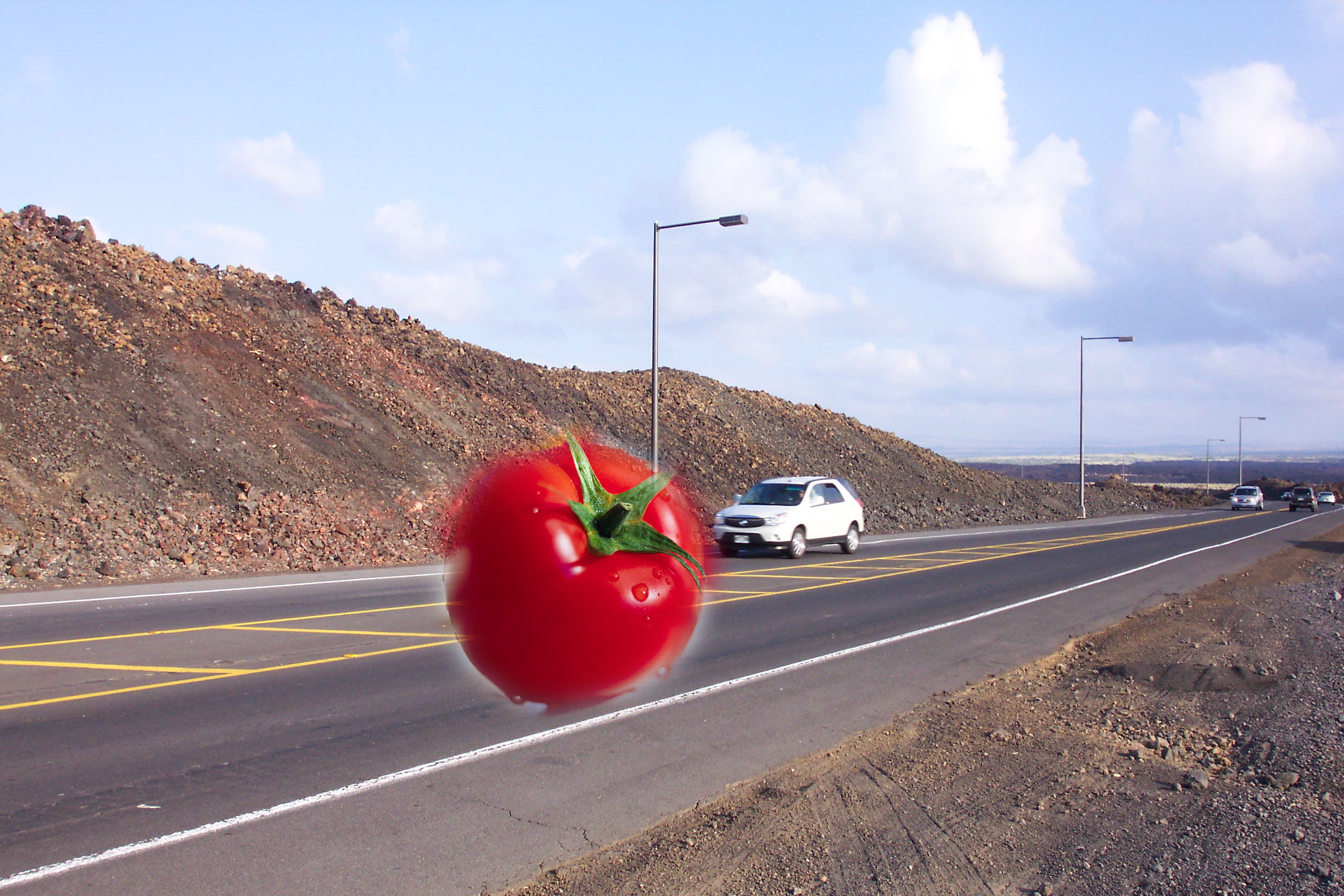
This photo shows a deadly Category 4 tomato touching down Near Kona, Hawaii.
The dominant species on Planet X is, like us, exoskeletal in structure, with a strong centralized information/analytic core operating over numerous individual foraging operative units, again like our own configuration. This should not be surprising, as all of our projections have strongly suggested that this is optimal for species to progress intellectually. This species, or more accurately, array of species, in the native taxonomy, is designated Blatta or Blatella, colloquially cockroach.
However, there are several other life structures more or less successful on the planet, most of them part of the Blattoid survival system, but still of interest in their own right. The closely associated Homo genus is particularly fascinating, as it has developed a kind of neuronal autonomy, all while fulfilling its primary function as Blattoid food aggregator. This neatly illustrates the principal of progress within dominance driving progress among subordinates as well. The benefits trickle down, as it were.
This group is a part of a large subgroup of life that has internalized skeletal structures, strange as it may seem that such an adaptation could survive the rigors of planetary change. No doubt it was successful only due to its usefulness to the more abundant exoskeletal populations. The internalization process appears to have been more general as well, since most species live outside the protective and nourishing saline water environment; they have evolved a means of carrying these essentials within them. Not terribly efficient, one might argue, but there they are. Indeed, the Blattoids themselves largely live outside water, as well.
Homo is a very homogeneous genus, having survived a major killing episode some 2,000 generations earlier as a single breeding population, or at most 2-3 such populations in close contact. The only extant species is the sapiens sapiens variety, others having died out. As a result of the extremely short breeding history since geographic expansion, they are a remarkably uniform species genetically, differing only by tenths of a percent. Nevertheless, much appears to be made of such trivial differences as can be identified, perhaps as a mechanism to evolve to accommodate diverse Blattoid species; more study is required, since this tendency is dysfunctional.
Perhaps the most curious attribute of Homo is the complete decentralization of species intelligence. Instead, each individual carries its own ideational complex built upon a central nervous system; so specific is this center, that if the head, where it is located, is removed, the individual immediately shuts down, and is therefor incapable of fulfilling its role in the species from that instant.
The explanation, of course, of such an unlikely array of evolutionary elements is in the role of Homo in service to Blattoids. Such extreme self-containment suddenly makes sense when seen as a response to the diverse situations in which roach populations find themselves; with primary food aggregators able to act spontaneously and autonomously to procure proper Blattoid habitats, any unforeseen problems can be easily averted.
The committee hopes this study will be helpful in making full contact with the dominant intelligent species on planet X; it may well be simplest to proceed through the intermediation of their Homo servants, as unpalatable as that may seem. Actually, though, they may be quite palatable, once their usefulness to us is ended.
My imaginary fan keeps insisting on more how-to posts, hence this, on how to interpret book blurbs.
On the back of every book* you will find helpful comments and short reviews of the contents, so you can make a wiser decision whether to read it or not. My investigative unit, however, has discovered that these reviews are not always what they seem. For example, sometimes quotes are shortened, and meanings can be subtly changed by elision. Here are some comments overheard at a local Starbucks; see if you can pick out what parts might end up as book blurbs:
“That book was horrible. I’d rather be riveting my eyeballs shut than read it again.”
“I’ll say, I couldn’t put it down fast enough when I tried to read it!”
“If I were a real barn burner, I’d throw that book in with it.”
“Another Tolstoy, he ain’t!”
“If you don’t read another book this year, it’ll be because you read this one.”
______________________________________________________________________
*An ancient medium consisting of bits of paper and ink bound together.
Beauty thrives in small spaces
Musings, Opinions, Imagination, Fiction
A Blog about magic, fiction and art
Not really embarrassed.
Is this real life?
Stories and Satarical Commentary For Earthlings & Other Aliens
Writing Lostness
Stories and Reflections Through the Social Lens: Essays on Identity, Culture, and Society.
 Omniop
